SSI: Storm scene investigators
After the storm, undergraduate researcher steps in to help assess the damage.
When aspiring meteorologist and physical geography student Alex Shupenia accepted her Undergraduate Research Award (URA) this spring, she couldn’t have predicted just how busy her summer would be.
“My work this summer has been exciting and fits directly with my career ambition of becoming a meteorologist,” says Shupenia. “I’m building the skills I’ll need to collect and analyse data so I can better understand all aspects of weather in the Canadian prairies.”
“I’ve learned to interview people who witness storms so I can understand what happened,” says Shupenia. “But I’m also learning how to collect important data using high tech drones, weather balloons and satellite imagery.”
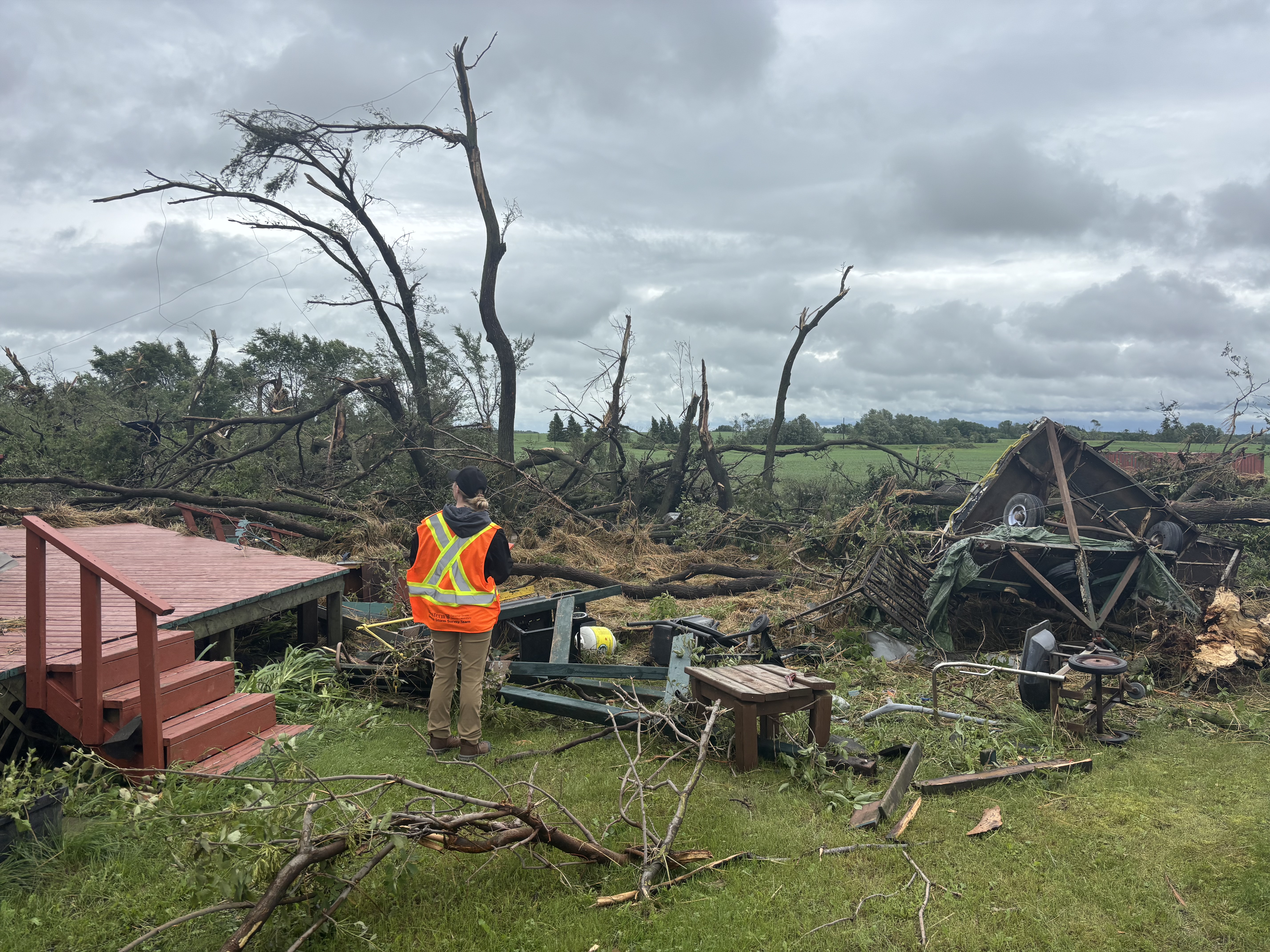
The research team has spent most of the summer out in the field surveying the damage left behind after the storms. Their goal is to document the downed trees, damaged buildings and debris left behind after the storms and tornadoes.
They are classifying tornadoes on the Enhanced Fujita Scale (EF Scale). So far the team has surveyed 20 tornadoes across Manitoba and Saskatchewan this summer – which includes two EF3 tornadoes. This summer is on track to break previous years’ records for the number of severe weather reports across the prairies.
“In our surveys we document all the evidence,” says Shupenia. “Our work is exciting because we are uncovering the details of the event in the aftermath, similar to forensic science.”
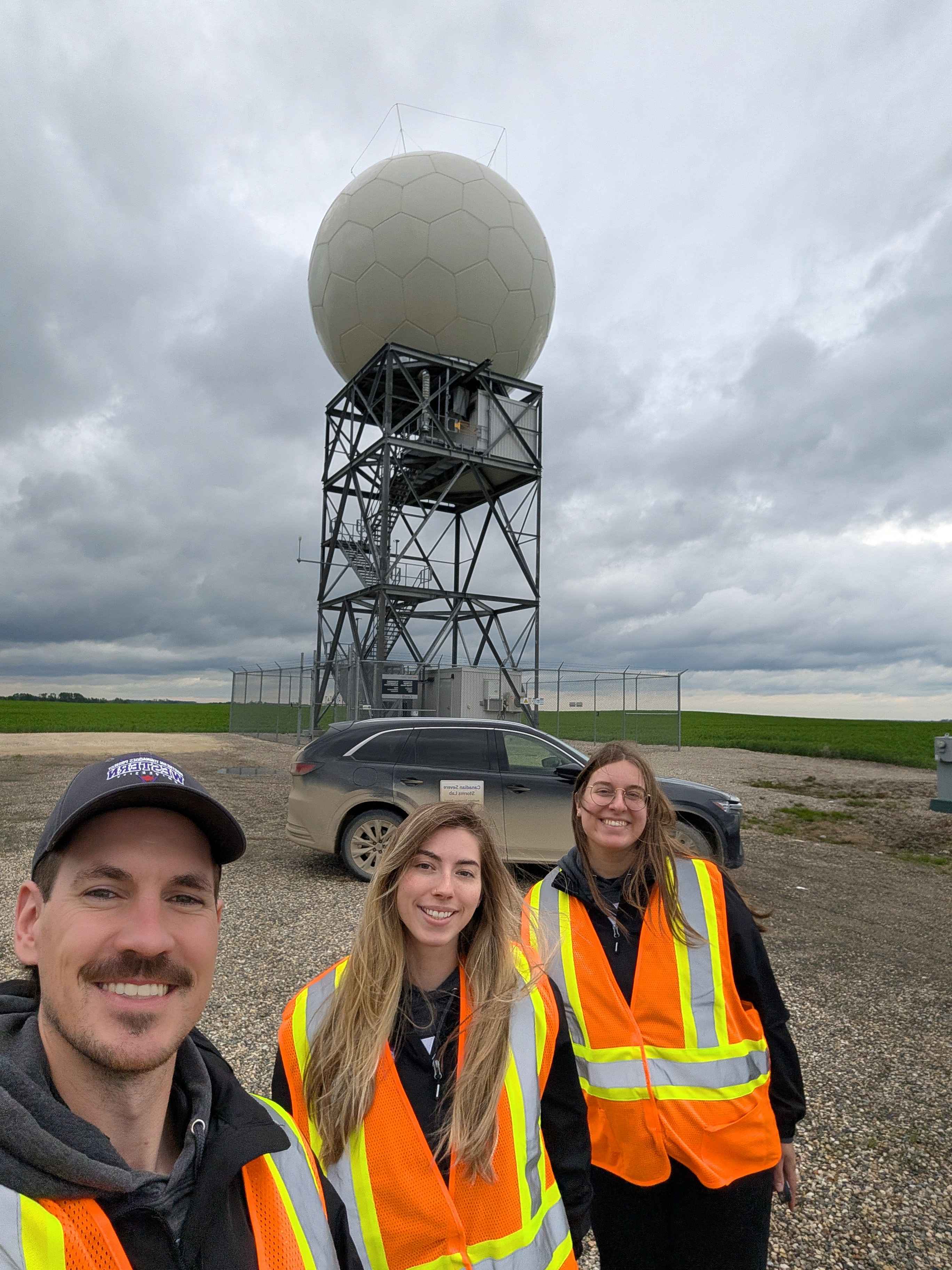
As a field intern, Shupenia is contributing to the Canadian Severe Storms Lab’s (CSSL) Northern Tornadoes Project (NTP), with UM’s Dr. John Hanesiak (Western Canadian NTP lead and professor in environment and geography). The Northern Tornadoes Project investigates severe weather to better detect tornado occurrences throughout Canada, better understand severe weather environments and help understand current and future implications of climate change.
Spring and early summer in Manitoba were marked with a barrage of extreme weather, including torrential downpours, tornadoes, hail and flash floods that washed out highways in the Parkland region. For the NTP Manitoba crew, the season has delivered no shortage of significant storms to track, document and analyse.
The URAs are funded through the Office of Vice-President (Research & International) and the University of Manitoba Students’ Union (UMSU), along with support from faculties. These awards provide undergraduate students with access to exciting research opportunities.
The application period for Summer 2027 starts in mid-January. Find more information here.
Dr. Depeng Jiang turns complex data into evidence that shapes health policy, programs and outcomes.
How one master’s thesis is championing gender-affirming nursing education.
UM PhD graduate and postdoctoral fellow Nitesh Sanghai finds purpose and family in ALS research.
Take a moment to ensure that your personal information in Aurora is current and to accept your user agreement.