How well do children understand AI?

New research from UM investigates AI literacy and safety for children.

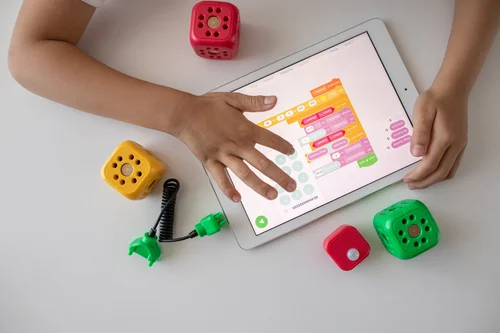
Child with tablet.
Estimated Read Time:
2 minutes
Estimated Read Time:
2 minutes

AI is everywhere. It’s an assistant in writing, a calculator and a search engine. 

As these technologies become more common in homes and classrooms, researchers at UM are asking the important question – how well do children understand the technology they are using?  

Dr. Shaylene Nancekivell, Associate Professor in the Department of Psychology is leading this new multidisciplinary study.

“Unfortunately, in Canada we’re behind when it comes to policy and digital literacy - especially among children,” says Nancekivell. “Despite many grassroots efforts, AI literacy is absent from our grade school curriculum and is left for each individual to figure out on their own.”

Woman smiling outside.
Dr. Shaylene Nancekivell

Understanding the risks

Ready or not, the future of childhood is being shaped by AI-powered technology. If used responsibly, AI helps children and parents alike with writing and study. But in the absence of formal public resources, experts are also raising concerns about misinformation, privacy and bias – issues which can be difficult for young users to recognize.

Interactions with AI are a two-way street. When people use conversation AI, their queries and responses are stored for a time, depending on the platform, and used to make inferences about who they are – such as interests, location or identity.

Recommendation algorithms already shape what people see online and the same types of systems are increasingly being integrated into digital tools used by children. Digital literacy means being aware of biased responses and the clear threat that people might be selling our identifying data.

“Policy can be useful in shortening this gap and bringing people back together with a common understanding,” says Nancekivell. “We know how AI works and how to keep people safe without restricting the right to access technology, but it's a balancing act.”

Partnering to protect children

The project brings together researchers from psychology, computer science and law to examine the challenges and opportunities created by AI technologies. 

Nancekivell is also joined by UM researchers Dr. Jim Young and Dr. Andrea Bunt in the Department of Computer Science and Dr. Bryan Schwartz in the Faculty of Law.

The research team is working closely with community partners including the Canadian Center for Child Protection, D2L a learning software company and digital media literacy organization MediaSmarts. 

“I think young people are really smart and they're using AI much more than we realize without an understanding of the degree that AI produces inaccurate information,” says Nancekivell. “Watching my own kids enter this digital world, I can't think back to any equivalent examples in own my own childhood and that’s why this data is so critically needed right now.”

Childs hands using a tablet.

Informing a safer future 

The research team will use the project to better understand how children between the ages of 8 to 12 interact with AI technologies and what kinds of supports educators need. Findings from the study will help inform educational resources that schools can use to teach young people to engage critically and safely with AI.

Parents can participate in this study and receive a digital literacy newsletter by joining Dr. Nancekivell’s database called the Healthy Human Development Group, focused right now on the critical ages of 8 to 12. Email Dr. Nancekivell to learn more: shaylene.nancekivell@umanitoba.ca

This project is supported with an award from the Natural Sciences and Engineering Research Council of Canada through the Alliance Society program. 

Research at the University of Manitoba is partially supported by funding from the Government of Canada Research Support Fund.

For nearly 150 years, UM has transformed lives through groundbreaking research and homegrown innovation. We push the boundaries of knowledge and do the hard work here in Manitoba to move our community and the world forward. With a spirit of determination and discovery, we are shaping a better future for our province and beyond.

By

Davide Montebruno