Highlighting campus transportation

2025 Campus Commute Survey results now available.

Four students walk towards Allen Building under the tree canopy.
Estimated Read Time:
2 minutes
UM community members use a variety of transportation methods to arrive on campus.
Estimated Read Time:
2 minutes
By

Office of Sustainability

We asked, and once again, you answered.  

Every second year, the Office of Sustainability, along with the Green Action Centre, surveys how UM community members travel to and from our campuses. In October 2025, we heard from a total of 5,451 respondents, 63 per cent of whom were students (undergraduate and graduate), 27 per cent staff and 9 per cent faculty members.  

In addition to traditional questions on commuting methods, distance travelled, greenhouse gas emissions associated with commuting, and opportunities to provide feedback on UM transportation programming, this year’s survey invited feedback on Winnipeg Transit’s system changes and their impacts on travel to UM.  

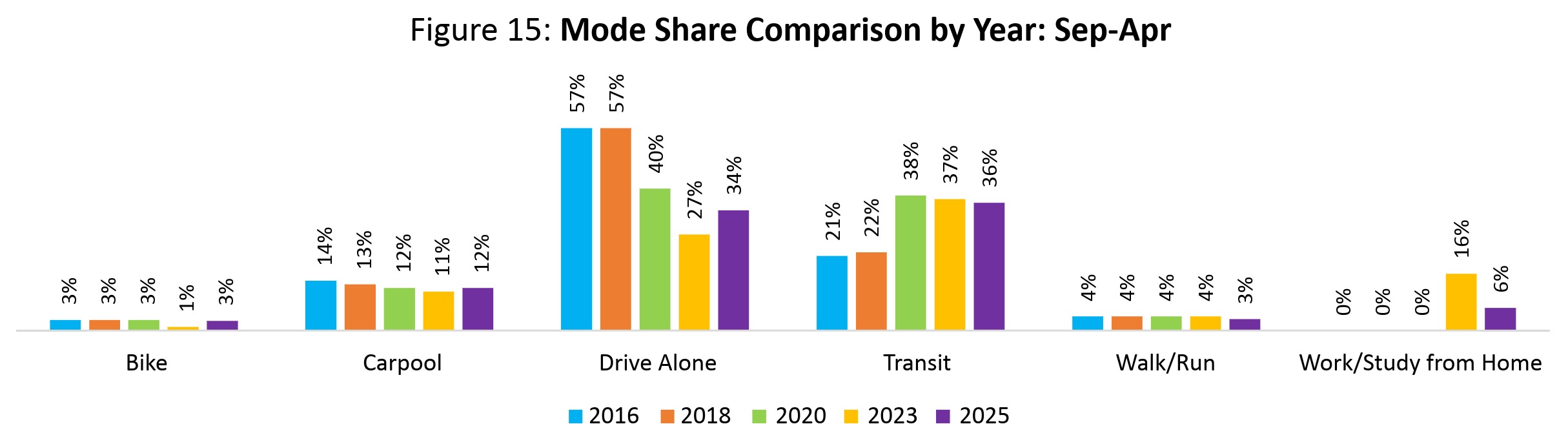
In October 2025, sustainable transportation options, such as transit and carpooling, continued to be heavily used, especially by students.  

  • Transit trips accounted for 36% of all commutes to UM campuses,  
  • Drive alone trips increased to 34% of commutes,
  • Carpooling, both as driver and passenger, made up 12% of commutes,  
  • Working and studying from home dropped to 6%, and
  • Walking (3%) and cycling (3%) made up the remainder of trips to campus in the fall and winter semesters.     
Commuting methods are compared every two years from 2016 to 2025.

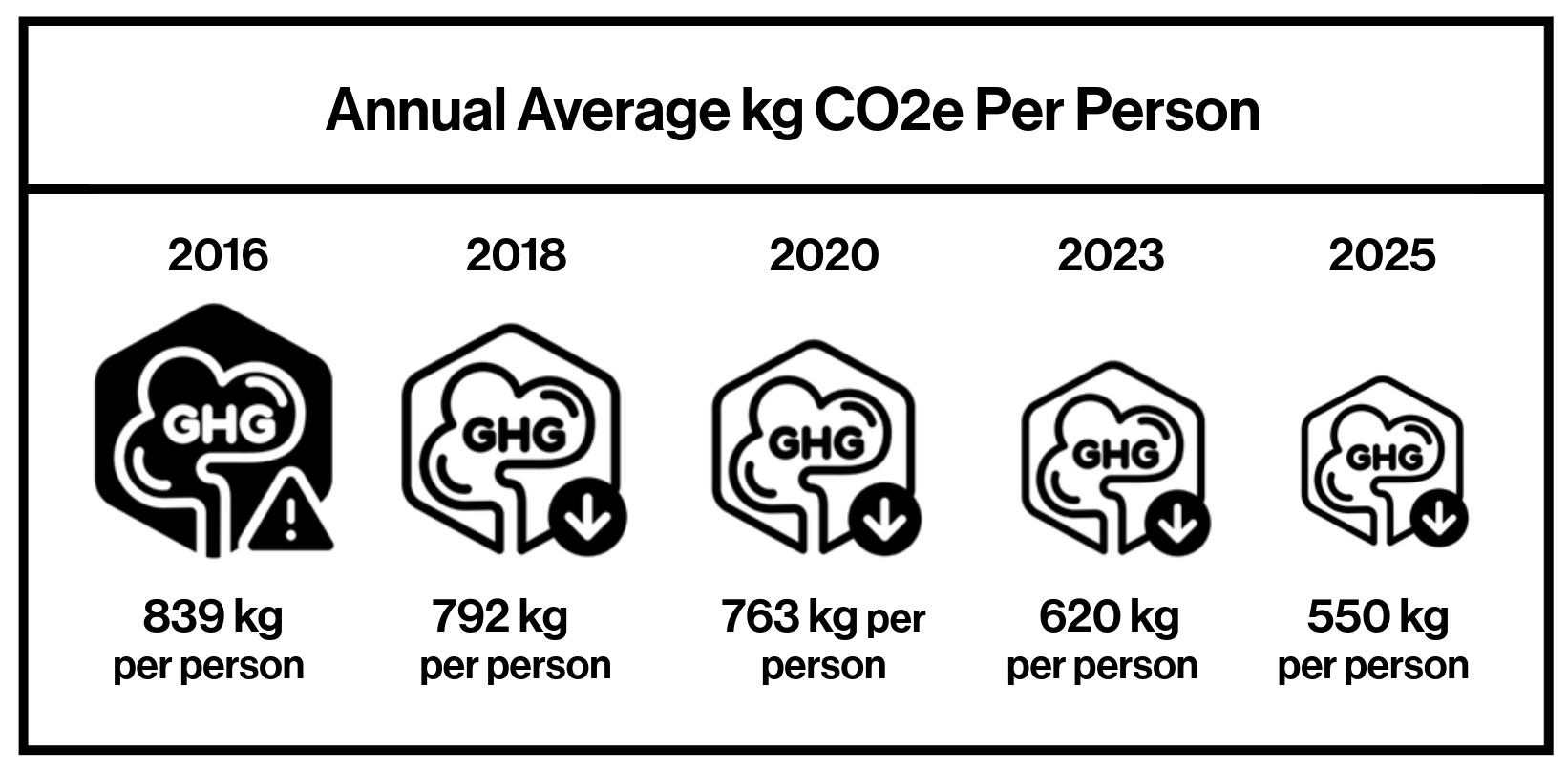
When it comes to carbon emissions, the average number of kilograms of CO2e per person has declined since surveying began in 2016, with the 2025 estimated average per person emissions dropping to 550 kg annually. This is equivalent to approximately one-quarter of a home's energy use for one year. 

Greenhouse gas emissions associated with commuting since 2016

Transit ridership

This year’s survey gathered insights from transit riders on their experiences taking transit to UM prior to and after Winnipeg Transit implemented its new Primary Transit Network changes. These questions were created by Winnipeg Transit and distributed through the survey on their behalf.

Survey respondents had the option to answer multiple choice questions rating their transit experiences and provide further context through long-form comments. Nearly 2,000 survey respondents shared individual comments on their transit ridership experience.  

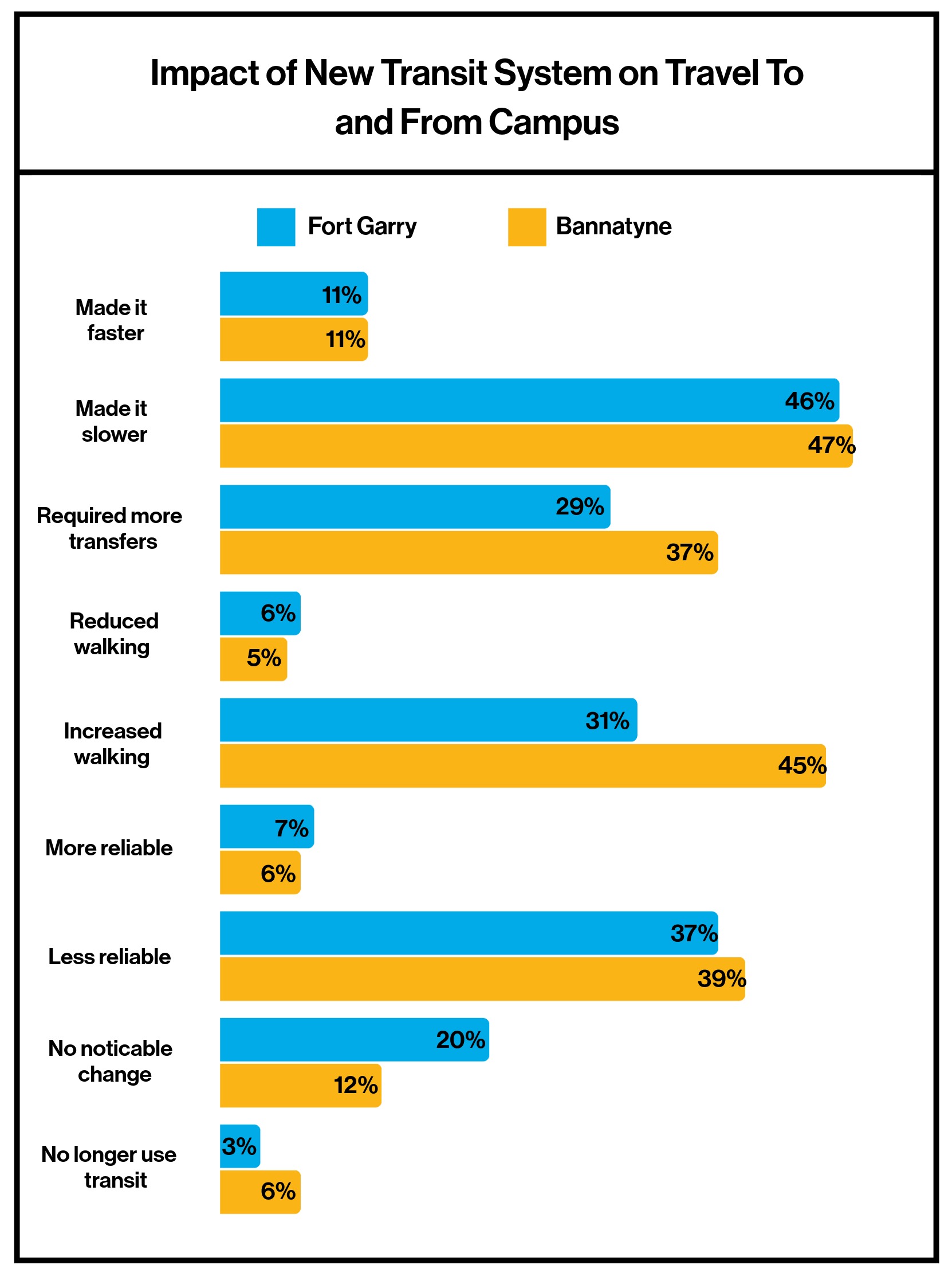
Overall, a majority of Bannatyne and Fort Garry survey respondents felt the new transit system had made their travel to campus slower and less reliable, and now required more transfers and increased walking time. 

These results and comments were compiled and shared with Winnipeg Transit in early 2026. 

Survey respondents' experiences with Winnipeg Transit system changes

Over the coming months, these survey results and recommendations will be reviewed by the Transportation Working Group, a group of UM staff who work on transportation initiatives tasked with developing and implementing a plan to reach emissions reduction targets set within UM’s Climate Action Plan.  

Survey results will also be beneficial as UM begins to implement its 30-Year Master Capital Plan, and while the Campus Planning Office initiates a campus Transportation Study to assess transportation strategies and roadway impacts of long-term building plans.  

Stay tuned for more information.  

Visit the Office of Sustainability website to learn more about UM’s transportation, sustainability and climate goals and programs.

Boilerplate: sustainability

We pursue sustainability in its many forms—societal, cultural, economic, environmental. Building a sustainable future is among the commitments you’ll find in MomentUM: Leading change together, the University of Manitoba’s 2024–2029 strategic plan.