A taste of history

Cooking historical recipes offers an unexpected entry point into the past.

Close-up of colourful food plate of green cucumbers surrounding red aspic bowl holding salad.
Estimated Read Time:
7 minutes
California seafood salad in a tomato aspic bowl: Recipe from a 1948 Cookbook published by the American Can Company.
Estimated Read Time:
7 minutes
When students walk into their history course, they don’t expect to find mixing bowls and vintage metal eggbeaters with wooden handles. They don’t expect their classroom learning to be supplemented by aromas and taste. 

But UM history professor Sarah Elvins asks her students to do something unexpected: cook.

In Elvins’ food history courses, students search through early cookbooks, wartime pamphlets and Depression era booklets, then select a recipe to recreate on their own. They cook historical recipes that are decades and even a century old.

Butter churns and eggbeaters

“Ive been interested in cultural history for a long time, and Ive often tried to find different ways to look at interesting sources,” says Dr. Elvins about her scholarship and teaching approach. 

She has long been fascinated by the historical, everyday objects and routines that quietly shaped people’s lives. 

For Elvins, the past comes alive through butter churns, wood stove temperatures, ration era substitutions and that unmistakable rhythm of a hand-cranked eggbeater. Over the past five years, the blossoming field is receiving popular attention, thanks to scholars, podcasters and YouTubers who recreate historical dishes.

“I try to look at sources people don’t think of as historical sources and take them apart,” she says.

New avenues into history

Recently, Elvins took students to a university food lab to cook historical recipes together in person. The cooking session was organized by Elvins, Dr. Jeongmin Kim and Dr. Jennifer Dueck as part of the Food Matters Research Cluster through UM Institute for the Humanities. It opened new avenues into history and into the social circumstances of the people who lived it.

The “hands-on approach to history while cooking recipes definitely provided a better understanding of how people lived in the past,” says honours history student Jenna Musgrove, who completed both Elvins’ domestic labour and her American food history courses. 

“The lack of modern technology provided a level of difficulty, highlighting how time-consuming even the most basic recipes can be,” she adds.

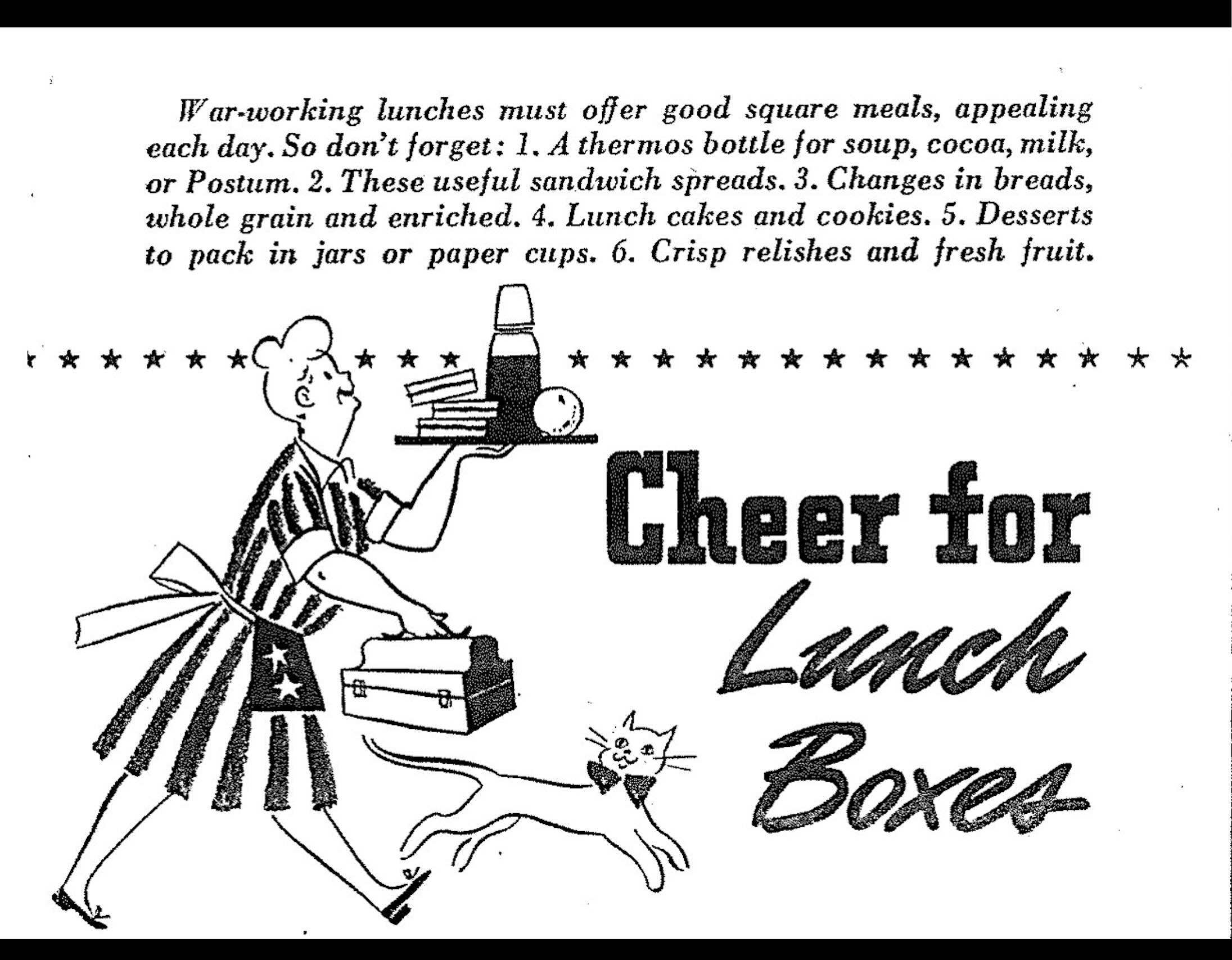
Illustration from 1940s American General Foods cookbook.

Cheer for lunch boxes? This illustration from a 1940s General Foods cookbook encouraged patriotic thrift.

Smiling young woman wearing cap in a forest setting.
Young woman with brown hair smiling.
Young man in black t-shirt smiling with background of green and yellow trees.
History students Jenna Musgrove, Isabelle Balcaen and Andreas Davison.
Cooking and recipes highlight these aspects of history that are often taken for granted.

Andreas Davison, honours history student

The activity resonated with Isabelle Balcaen, an honours history student enrolled in the food history course. Balcaen noticed an emphasis on economic thriftiness and said making the recipes shed light on aspects of daily life and the creativity and labour required to support the war effort during the Second World War.

She points out, “Despite working 8 to ten hour days, people spent time crafting their meals, as there were no pre-packaged or frozen meals available.”

Cooking and recipes highlight these aspects of history that are often taken for granted, says student Andreas Davison who also took part in the cooking.

He cites the interrelationship between hidden labour, gender expectations and nationalism throughout wartime. Davison is completing honours history and will continue to his master’s degree in history at UM this fall. He is president of the UM History Students’ Association (UMHiSA).

For Davison, hands-on cooking in the kitchen offered a novel respite from academic studies, while uniquely connecting him with peers and the subject matter. Discussing with other students how to stretch the ingredients created an atmosphere of comradery and collaboration.

The activity, he says, “changed our perspective on what the labour we talk about actually is and means.” 


Recipes reveal:

  • Diets, habits and menus of the day

  • What ingredients were commonly available and affordable

  • What kitchen tools and technology existed at the time

  • Societal attitudes, customs and expectations

  • How domestic labour changed over time

  • Knowledge assumed by older recipes (“quick oven,” “nut sized butter,” “enough flour to make a dough”)

Historical recipes, experiential learning
Student gather around a table filled with colourful cooking ingredients.
Students try their hand at making historical recipes, including Orange Drop Cookies.

Recipes as historical documents

Recipes and cookbooks, Elvins points out, are a treasure trove of historical content.

Both act as windows into another time, drawing students into history through an often overlooked but rich archival source. Students reflect on what the cooking process reveals about society and context.

Something as basic as cooking over a wood stove versus an electric stove tells you so much, she notes.

“If a recipe says to put something in a ‘quick oven,’ what temperature is that? That’s assumed knowledge. Students have to interpret it.”

Every historical dish presents challenges such as unfamiliar ingredients, vanished tools, vague measurements or bygone culinary techniques. Some pre-20th century recipes contain more silence than instruction.

“These early recipes often don’t have a lot of extra cooking information,” Elvins says.

This interpretive trouble is precisely the point. Students must grapple with availability, affordability, labor, technology and historical domestic life — all through cooking.

And what period cookbooks sometimes lack in specific instructions is made up for by their wealth of historical information, from societal attitudes and changing technologies to menus, diet and available ingredients of the day.

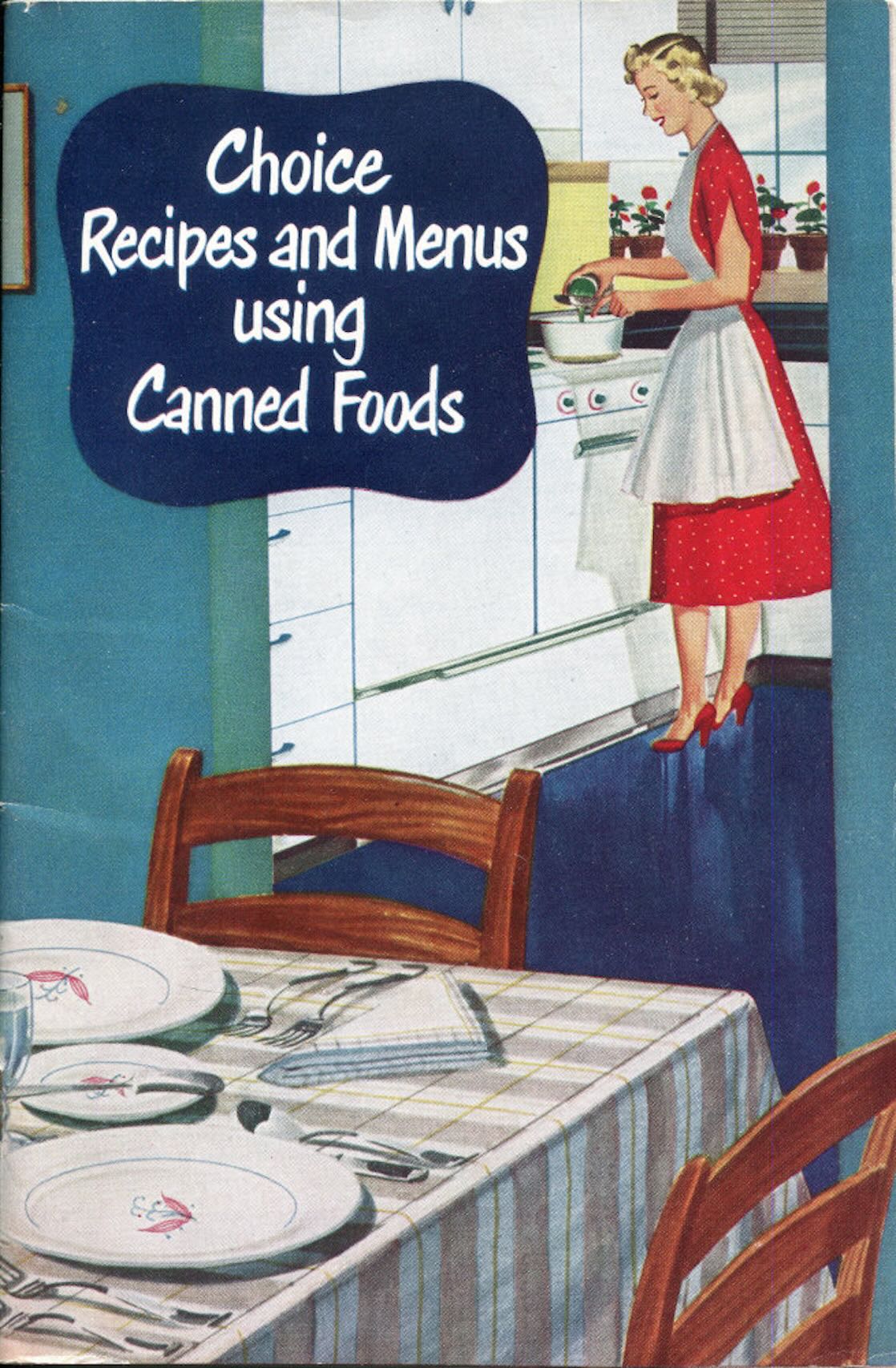
Choice Recipes and Menus using Canned Foods, a cookbook published by the American Can Company in 1948.

Colourful vintage cookbook cover with title: Choice Recipes and Menus using Canned Foods.
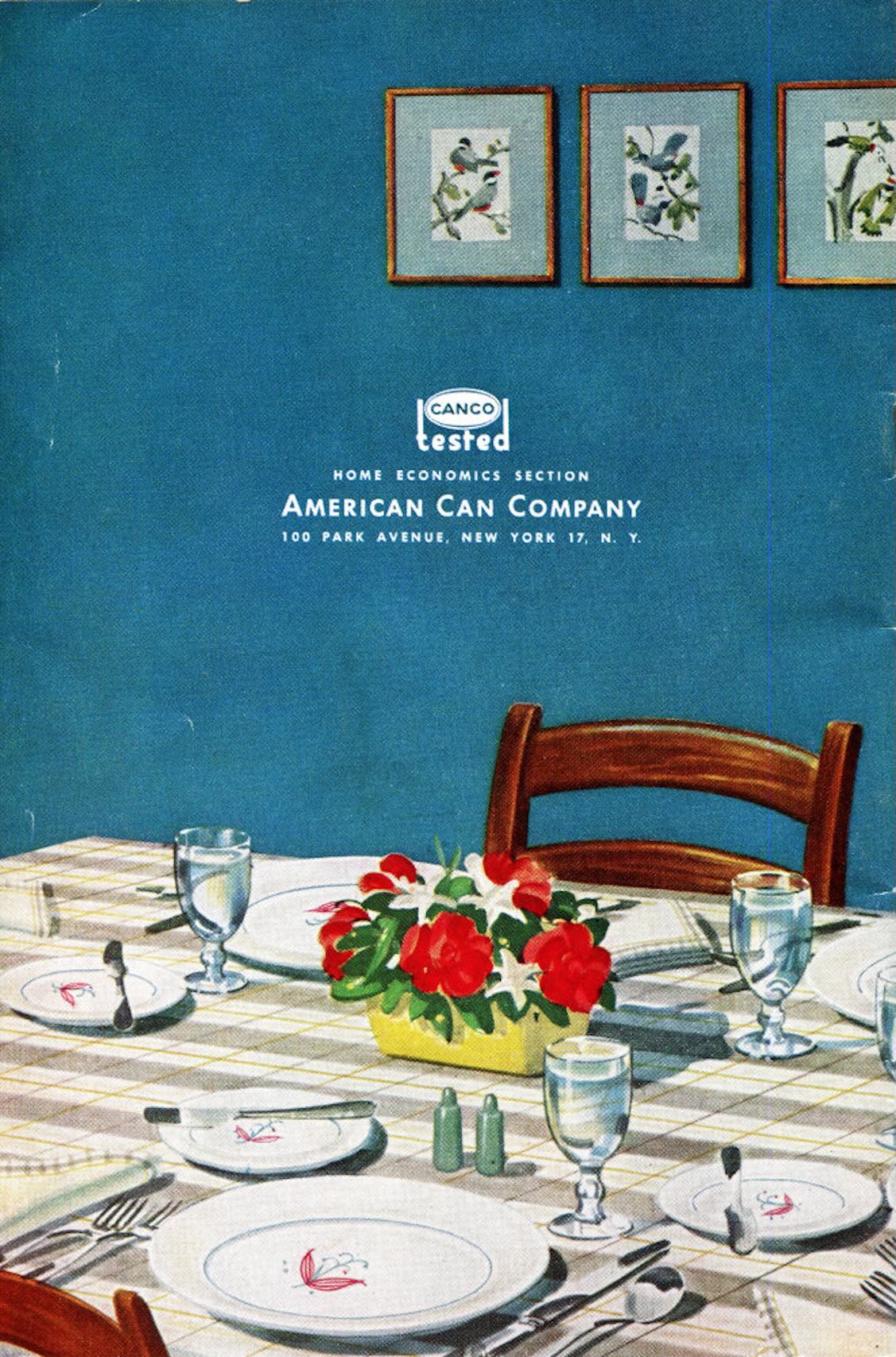
Back cover of the cooking with canned foods cookbook from 1948.


Back cover of the 1948 cookbook published by the American Can Company.

Into the kitchen: Learning in action

Elvins emphasizes that her cooking assignments aren’t culinary competitions.

“This is not the bake-off. I’m not judging them on if it’s delicious or the presentation,” she laughs.

“I want [students] thinking critically about what the process of making this dish helps us understand,” she says.

What emerge are insights, surprises and lots of personal stories and connections.

Some students have cooked over backyard fire pits. Others interviewed grandparents about forgotten kitchen techniques. One student whipped egg whites with a fork until her arm ached; another intentionally avoided all modern kitchen conveniences and discovered just how long a “simple” recipe once took.

These embodied experiences, Elvins observes, makes history tangible.

Students weren’t just reading about scarcity — they were tasting it. They weren’t only analyzing industrialization; they were cranking an apple peeler and feeling the mechanics in their hands.

In the food lab, something else happened too: students talked. They shared family memories, cultural traditions, farm stories and immigration histories, weaving their own lived experiences into the historical narrative.

“History students don’t usually work in a lab setting,” she says. “Just being in there gave the experience a different spin.”


By rotating through recipes from different eras, students see change over time in a visceral way. 

Examples include:

  • Industrialization through hand cranked egg beaters and mechanical apple peelers
  • The Great Depression through creative substitutions and resource-poor recipes
  • Wartime rationing via low sugar cookies and eggless cakes
  • Postwar convenience culture with cake mixes, canned soup, and pre-made dough
Seeing historical change through cooking
Two people bend over a stove.
Mashing lentils to make ‘sausage' patties, a wartime era recipe that substituted lentils for meat.

Food sparks conversation and builds community

Food connects people across time and space, and Elvins sees her approach as deeply engaging because of that.

It helps students imagine themselves in someone else’s shoes.

“Your goal is to make people think a little differently about their lives in the present,” she says, giving a bit more nuance to history and stories about families, migration, inequality and daily life.

“I always learn a lot too,” she says. “Students come up with insights I’ve never thought of.”

As the kitchen hums with activity, students begin sharing stories — family memories, farm traditions, cultural dishes sensory recollections.

“It breaks down barriers,” Elvins says. “People start talking about their own personal family history. We get people who have grown up in farm settings saying, ‘Oh, we made butter like this,’ and others sharing what their grandmother experienced or cooked.”

This is where the magic happens.

“That kind of learning where students are learning from each other and I'm learning from them, you can't replace that.”

Elvins describes these ‘aha!’ moments as the gold standard of teaching and pedagogy.


Food history crosses numerous subfields and is growing rapidly. 

Related fields include:

  • Women’s history
  • Immigration history
  • Religious history
  • Social history of labour
  • Material culture
  • History of the senses
A field rich with stories and scholarship

Food travels

“We don’t know exactly what something tasted like in 1930,” says Elvins, “but we can try to recreate it. And going through the steps is incredibly revealing.”

She cites immigration historians like Donna Gabaccia and Franca Iacovetta, who have explored how food traveled with communities and adapted to new environments. 

Her own family’s story includes a recipe known as Cumberland Chow Mein, cooked by Japanese immigrants in BC from Cumberland, BC that included local vegetables and is shaped by Chinese restaurant influences.

The dish traveled with them even after internment. “Far away from where it originated and is part of the story of the family,” Elvins says.

Food is more than nourishment — it’s memory and personal stories.

Food is ephemeral. The recipe stays and the memory, but the food is gone. And as a historian, that’s a weird thing to get your head around.

Dr. Sarah Elvins, UM history professor

“And it’s ephemeral, right?” she says. “So, the recipe stays, but the food is always gone. And so, you’re always remembering it and yet it’s very fleeting. You know, we eat it and it’s gone.”

Elvins notes, “And I think that’s also, as a historian, a weird thing to get your head around because we’re always trying to think about sources.”


Talking history at the dinner table

These hands-on sessions show up as highlights in student evaluations and feedback. Even students who profess no cooking skills embrace the challenge.

Students also report their families doing a double take over the notion of making Orange Drop Cookies or a Depression pie in class. 

Elvins laughs. “Their family says, ‘You did what in class today?’ And then suddenly everyone’s talking about history at the dinner table,” she adds.

Students become ambassadors for the idea that history is more than memorizing dates.

“It’s fun,” Elvins says simply. “It makes history come alive.”

Food history sampler

Tasting History with Max Miller (YouTube channel)

Culinary historians of Canada: A treasure trove of old Canadian recipes and cookbooks.

The Recipes Project: Recipes across a broad historical and geographic span.

Early American (YouTube channel)

Heritage gourmet (Parks Canada)

Cookbooks and migration foodways (Canadian Museum of Immigration)

Two students with aprons and hairnets, one mixing batter, one pouring flour into a measuring cup from a yellow bag.
Students at Dr. Elvin’s cooking history workshop.

Boilerplate: empowering learners

At UM, we encourage life-long curiosity while providing tools – inside and outside the classroom – to succeed in a rapidly changing world. Empowering learners is one of the strategic themes you’ll find in MomentUM: Leading change together, the University of Manitoba’s 2024–2029 strategic plan.