Students champion sustainability at UM through research, advocacy, and hands-on action
Undergraduate, graduate, and student groups received awards for their sustainability work.
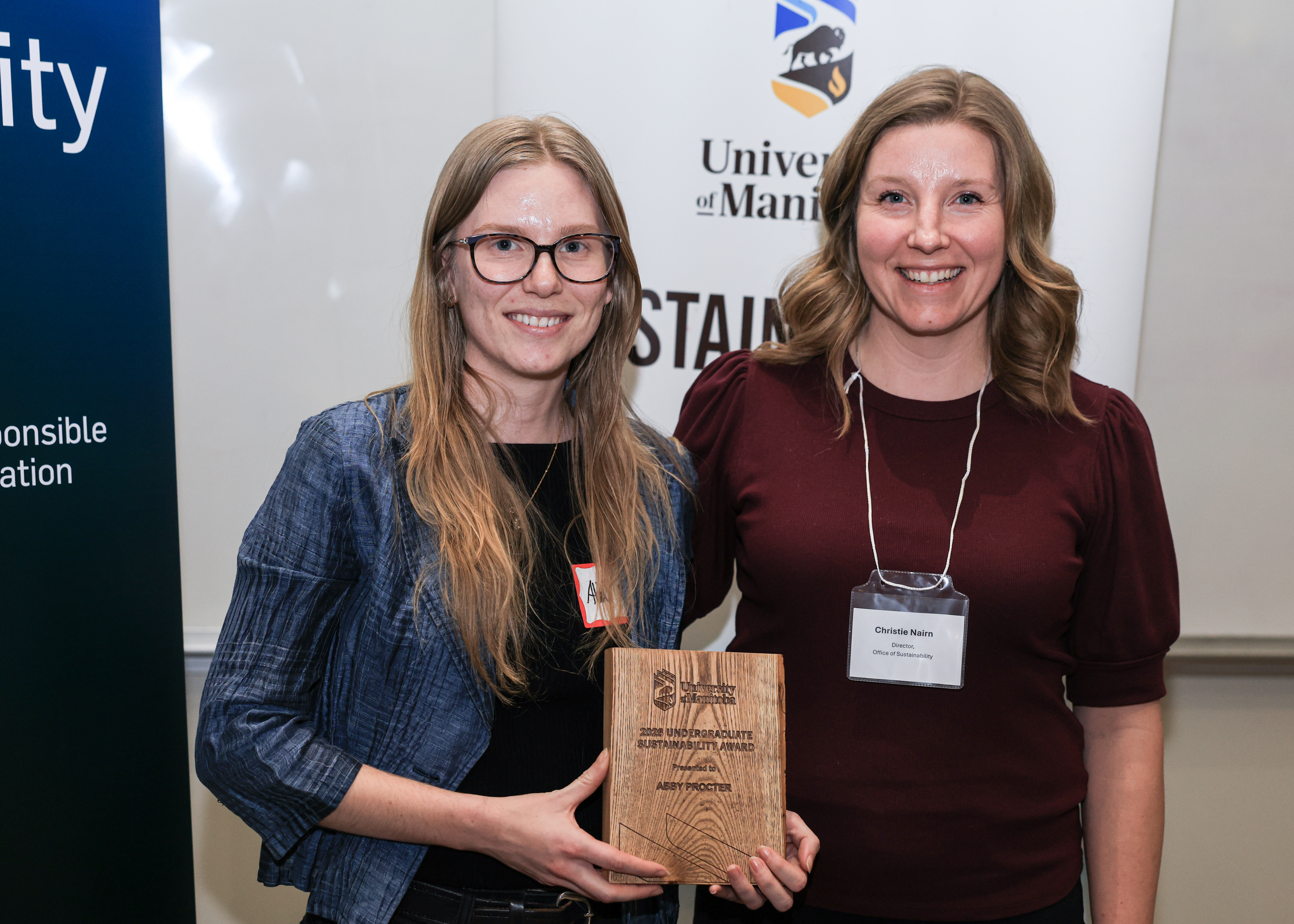
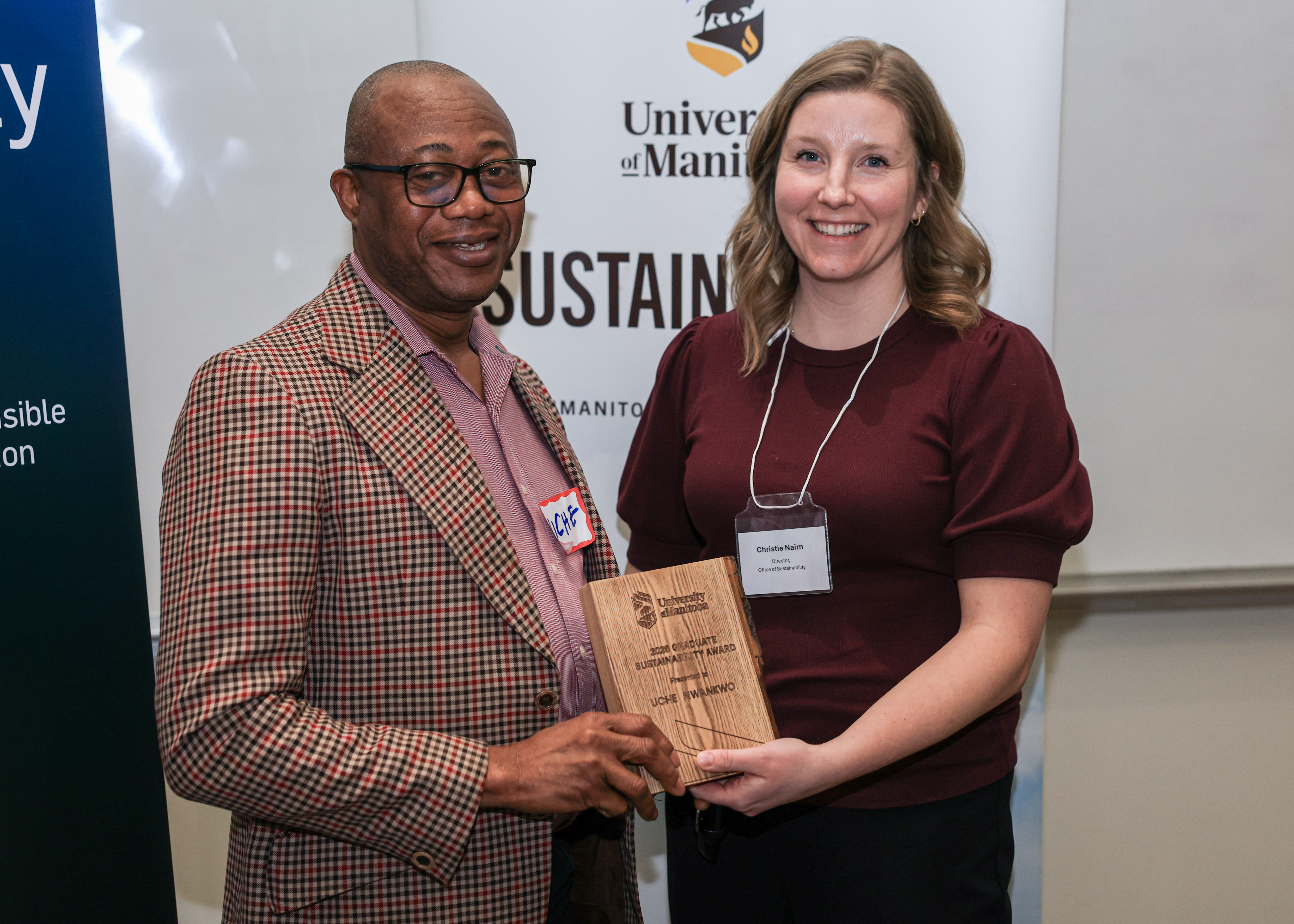
The University of Manitoba celebrated the outstanding sustainability leadership of its community during the 2026 Sustainability Awards presentation, recognizing students, staff, faculty, and collaborative teams who are driving meaningful changes across campus and beyond. This year’s student award recipients, Abby Procter, Uche Nwankwo, and the UM Wetlanders Club, demonstrate how UM students are merging academic passion with action to build a more sustainable future.
Economics student Abby Procter, the 2026 Undergraduate Sustainability Award winner, has dedicated her academic journey to integrating environmental health into economic thinking. As president of the Economics Society, she led programming that highlighted how traditional economics has often overlooked environmental impacts.
Her advocacy extended nationally and internationally this year. Procter was invited to speak alongside Canada’s Minister of Environment at the Local Conference of Youth, where she contributed to the National Youth Statement presented at COP30 in Brazil. She emphasized Canada’s renewable energy transition, stressing the role of private sector incentives and economic reconciliation in climate policy.
Procter also completed a co-op placement with the Canada Water Agency and Environment and Climate Change Canada, contributing to initiatives including the Arctic and Northern Framework, the Nunangat Policy, and EcoAction funding. She plans to continue her sustainability leadership in the field of environmental law.
PhD candidate Uche Nwankwo, winner of the Graduate Sustainability Award, has significantly strengthened UM’s food security landscape. After identifying alarming levels of student food insecurity, he mobilized greenhouse staff, faculty and students to grow thousands of free plants, ranging from vegetables to perennials, which were distributed across the UM community.
Nwankwo also advanced campus biodiversity by coordinating the creation of food gardens and a food forest at 70 Dysart Road adjacent to St. Paul's College, emphasizing culturally meaningful crops for African students. His work reflects a commitment to practical solutions paired with student empowerment.
Beyond hands-on projects, Nwankwo supports sustainability education through contributions to UM’s ecosystem restoration courses and certificate programs.
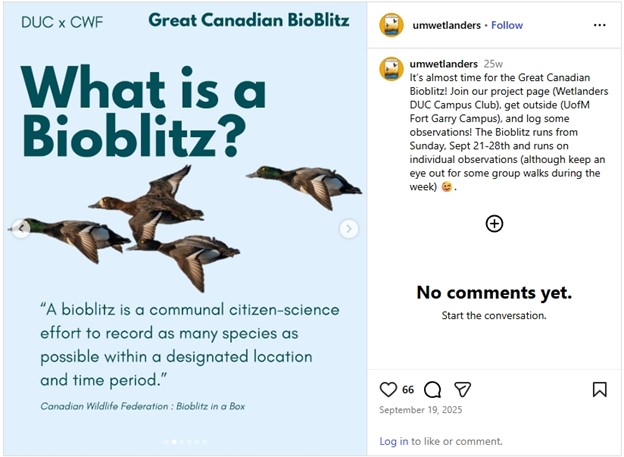
For nearly ten years, the UM Wetlanders Club has enhanced wildlife habitat on the Fort Garry campus by constructing and maintaining wood duck boxes and duck tunnels. This year, the club expanded its efforts by hosting the Great Canadian Bioblitz, leading guided nature walks, co-organizing river cleanups, and offering networking opportunities with wetland conservation professionals.
Their vibrant online engagement—from logo design contests to recruitment campaigns—has strengthened student participation in conservation activities across campus.
In addition to the students who were recognized, Sustainability Night also honoured the contributions of staff and faculty who embed sustainability into their daily work.
A longtime green office leader in Career Services, Lisa MacPherson has spearheaded organics collection, battery recycling, reusable paper initiatives and creative reuse programs across her department, inspiring colleagues through everyday sustainability practices.
Through arts-based learning, community engagement and innovative pedagogy, Dr. Punam Mehta empowers students to explore real world social determinants of health—including food insecurity and homelessness—through photography and critical reflection. Her "Visionary Lens" project has become a powerful campus exhibit.
A team from the Centre for the Advancement of Teaching and Learning was recognized for launching multi-departmental sustainability efforts—from expanding the recycling program to include pens and batteries to growing the office compost systems with gamification. Co-workers Bran Adams, Anna Neklo, Samantha McIvor, and student Robin Chow highlight how collective action can spark meaningful cultural change.
Together, this year’s winners reflect a growing culture of innovation, collaboration, and environmental responsibility across UM. From student led food security programs to staff driven recycling initiatives and faculty leadership in sustainability education, the UM community continues to push the boundaries of what a sustainable campus can be.
At UM, we believe in meeting today’s needs without compromising the well-being of tomorrow’s generation. We pursue sustainability in its many forms: societal, cultural, economic and environmental. Building a sustainable future is among the commitments you’ll find in MomentUM: Leading change together, the University of Manitoba’s 2024–2029 strategic plan.
The Bisons Integrated Support Team brings a holistic approach to supporting student-athletes
From advocating for Indigenous Peoples at the UN to becoming Chief of her First Nation, this law student remains unstoppable.
Student exhibit examines health and social issues
Asper School MBA students conduct a cost-benefit analysis on converting diesel school buses to electric.