Visionary Lens: An Educational Tool exhibit explores health education through art
Student exhibit examines health and social issues
An exhibit featuring student photography that examines health and social issues took place on Dec. 2 on the Fort Garry campus.
The event, titled Visionary Lens: An Educational Tool, showcased the creativity and social awareness of students as they explored health and justice through art.
Dr. Punam Mehta, an instructor in the Rady Faculty of Health Sciences’ College of Community and Global Health, founded Visionary Lens, which began as a classroom project in 2021. She teaches courses on program planning and health promotion, centring Indigenous and feminist voices – an approach reflected in the exhibit’s themes.
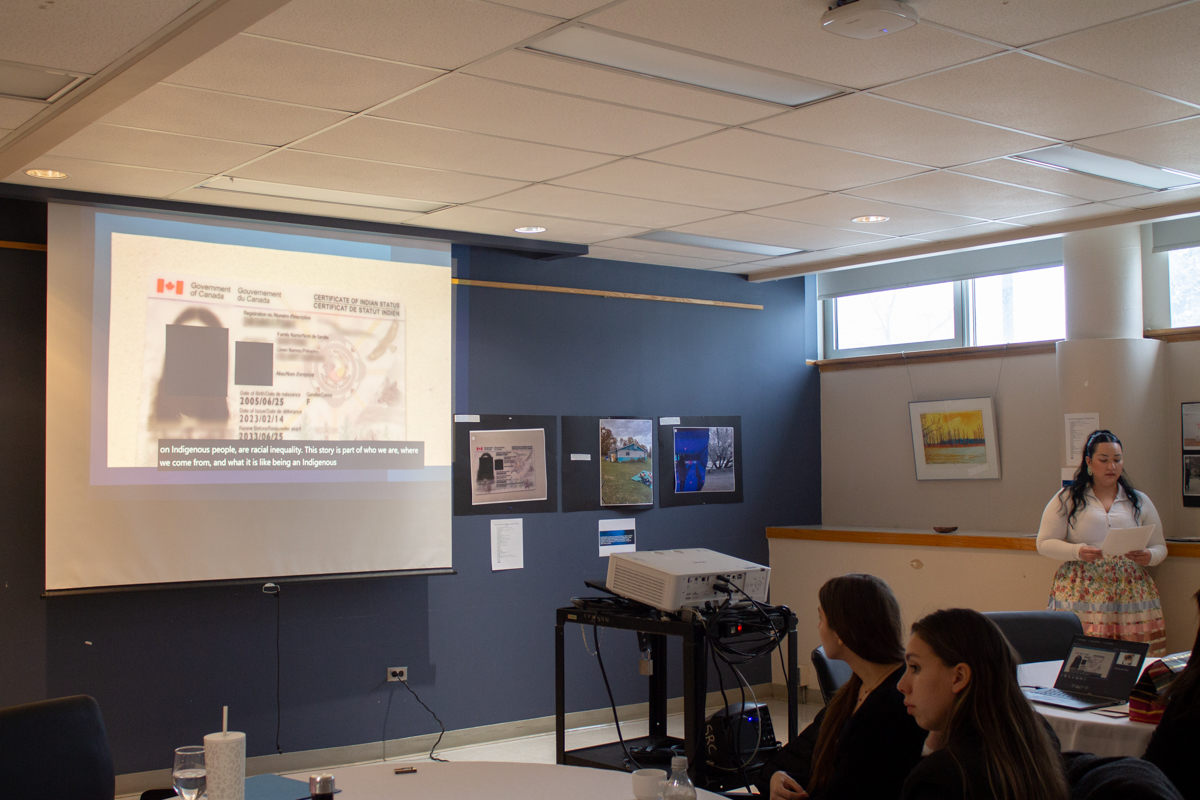
In her photography, student Hilary Rosteski captured the emotional weight and personal meaning of a treaty card, showing how it can represent generations of history, identity and survival.
“My photograph speaks to the theme of continued colonization,” said Rosteski. “This piece of plastic holds a lot of meaning. It means more to me than a piece of ID. It is my cultural background, my family background.... It's a type of colonization, a treaty card still happening in Canada, having to carry around a piece of plastic that has proof of what ethnicity an individual belongs to.”
Mehta said people who viewed the exhibit “were stepping into the lives, experiences and imaginations of students who are learning to see the world through the lens of respect, dignity and justice.”
The exhibit featured 50 photographs selected from more than 500 submissions by Mehta’s undergraduate students.
“Students are not just learners – they are creators, observers and ethical storytellers,” she said. “Our work is grounded in feminist documentary photography.... Every photograph is a relationship, every story requires listening and every image carries a responsibility to reflect the strength and dignity of its subjects.”
Students explored topics such as homelessness, food insecurity, aging, Indigenous health and violence against women.
“What the photographs revealed are intimate, powerful moments,” said Mehta.
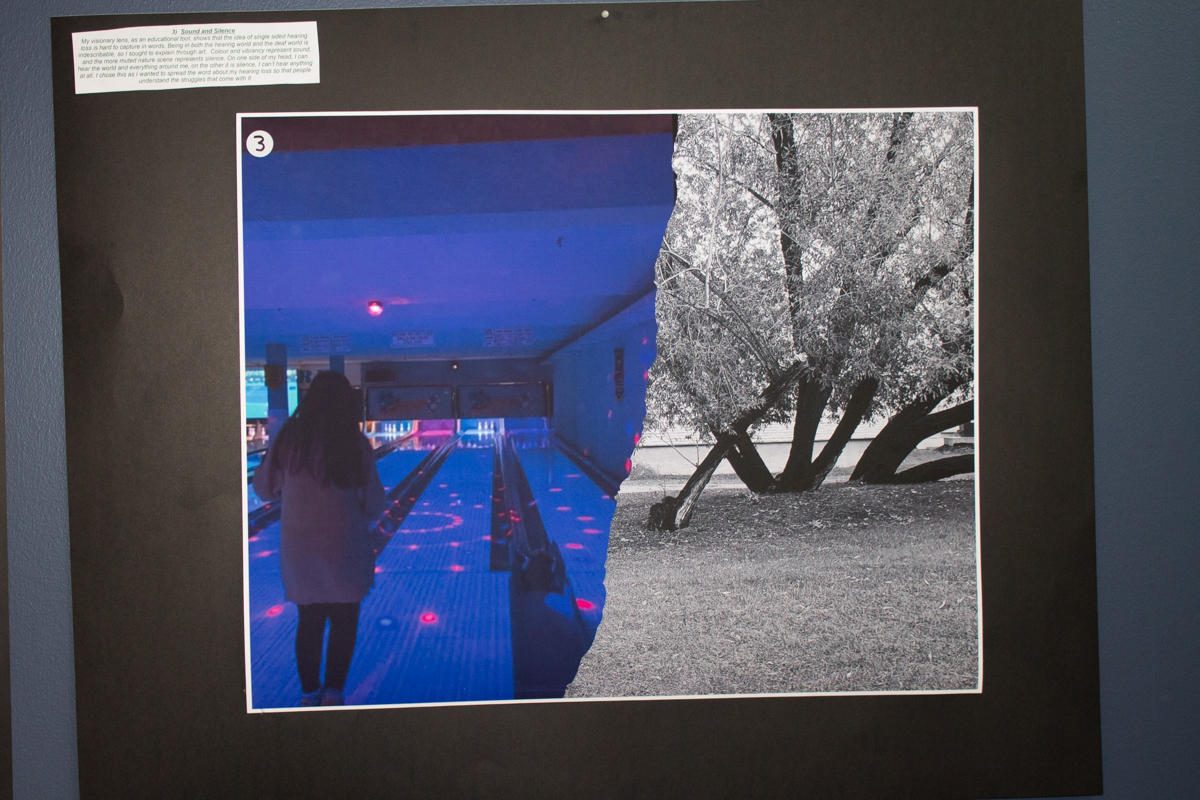
One image came from a partially deaf student who reflected on sound and silence, showing how communication, identity and community take shape in ways that are often overlooked.
Mehta said the exhibit included work from students with diverse backgrounds, providing local, rural and international perspectives.
“I'm also empowering Indigenous students and diversity in the classroom. I'm talking about anti-Black, anti-Indian, anti-Asian racism,” she said. “Visionary Lens aims to bring the human race together.”
Mehta said the classroom remains one of the most radical spaces of possibility, and Visionary Lens is a testament to that.
“The College of Community and Global Health has an opportunity to support marginalized communities and to touch Indigenous peoples’ lives in the path of reconciliation in ways that are transformative,” said Mehta.
To learn more about the College of Community and Global Health, visit:
The Bisons Integrated Support Team brings a holistic approach to supporting student-athletes
New funding for accessible tools announced earlier this year.
A new cutting edge in disease prevention.
The Dean's Prize recognizes exceptional academic achievement, strong leadership skills and notable personal service.