UM researchers join new international collaboration exploring gravitational waves in space.
Estimated Read Time:
2 minutes
Dr. Samar Safi-Harb, Tier 1 Canada Research Chair in extreme astrophysics, (physics and astronomy)
Dr. Samar Safi-Harb, Tier 1 Canada Research Chair in extreme astrophysics, (physics and astronomy)
Estimated Read Time:
2 minutes
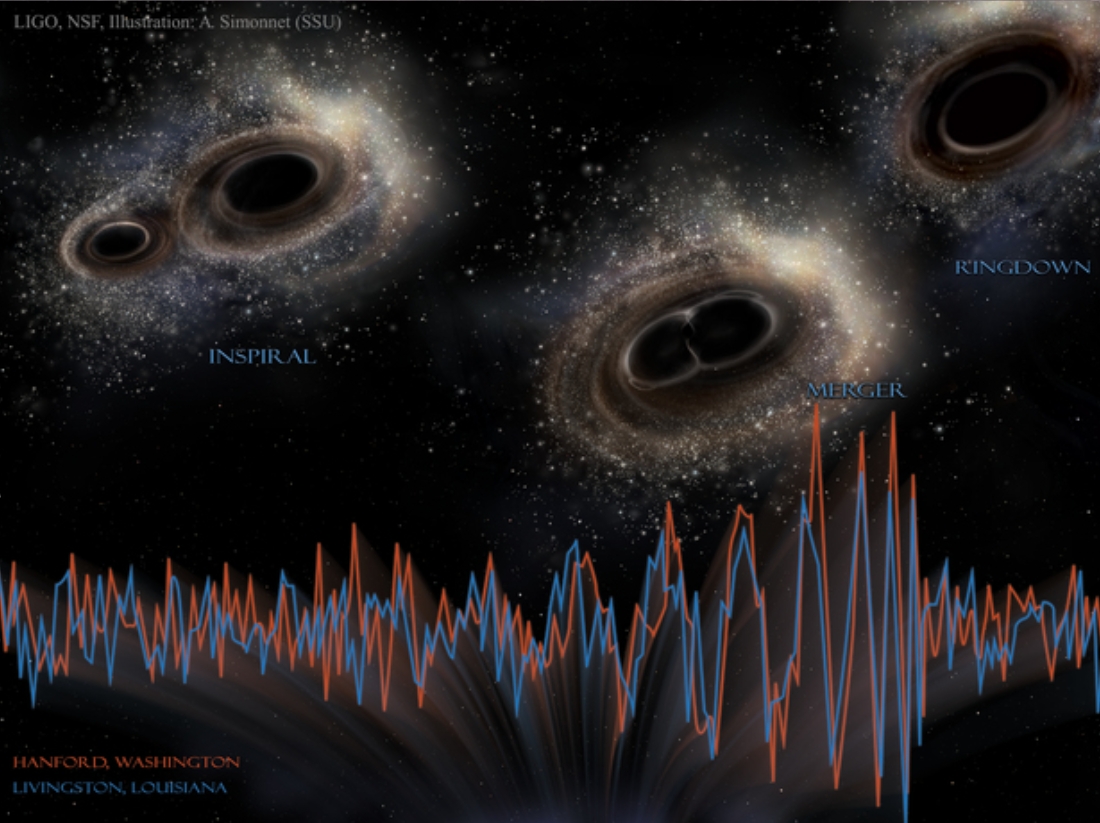
The University of Manitoba has joined a new Canada Foundation for Innovation (CFI)-funded network of Canadian universities tackling some of the most fundamental questions in modern astronomy, including how gravitational waves occur when black holes collide.
“Gravitational waves – ripples in space time - were first predicted in Einstein’s theory of general relativity over 100 years ago,” says Dr. Samar Safi-Harb, Tier 1 Canada Research Chair in extreme astrophysics, (physics and astronomy). “This new branch of astrophysics expands our understanding of the universe through the fundamental physics of gravity.”
This new branch of astrophysics expands our understanding of the universe though the fundamental physics of gravity.
Dr. Samar Safi-Harb
New frontiers in astrophysics
Safi-Harb and Tyrone Woods (assistant professor, Physics and Astronomy) have received $670,000 in new funding from CFI and Research Manitoba to play a key role in the Canadian Gravitational Wave Astrophysics Infrastructure Network (GRAIN) with experts from UM, UBC, McGill, Bishops, Lethbridge and Montréal.
This initiative will ensure Canada leads the next generation of discovery though participation in major international efforts to detect and understand gravitational waves created by black hole and neutron star collisions in distant galaxies.
As a network, GRAIN will provide both hardware and instrument improvements along with high-performance computing and the software needed to detect, process and analyze data coming from gravitational wave detectors on earth, and soon, in space.
“Our UM team will provide critical software to allow for rapid identification of gravitational waves,” says Safi-Harb. “Improved high-performance computing will allow thousands of researchers around the world to process and analyze the massive amount of data captured by the increasingly sensitive detectors.”
Gravitational wave detectors on earth
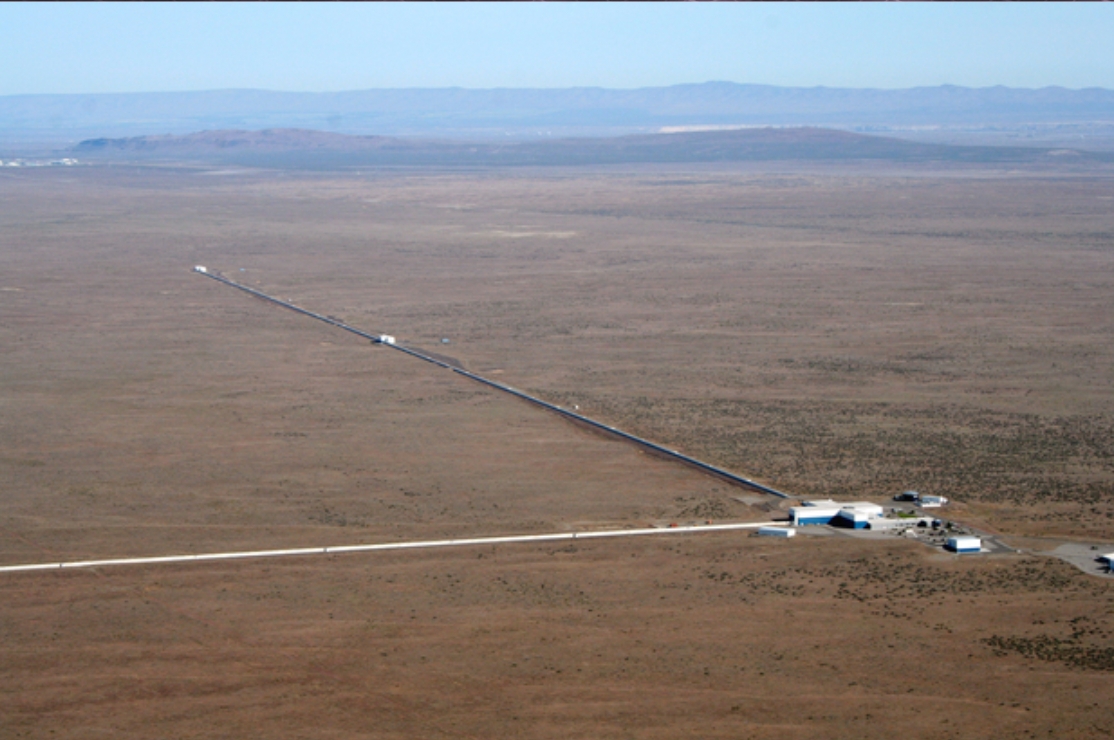
Since 2015, over 300 gravitational wave events have been detected by the Nobel Prize winning Laser Interferometer Gravitational Wave Observatory (LIGO) Scientific Collaboration, based in the Unites States. This L-shaped observatory detects vibrations in 4-kilometer-long arms containing an interferometer that measures gravitational waves through tiny shifts in laser light caused by space stretching and squeezing.
“We put the University of Manitoba on the map when we joined the LIGO Scientific Collaboration in 2023,” says Safi-Harb. “This project will elevate Manitoba’s profile internationally, while training and supporting high-skilled jobs in software, data science and cybersecurity.”
Gravitational wave detectors in space
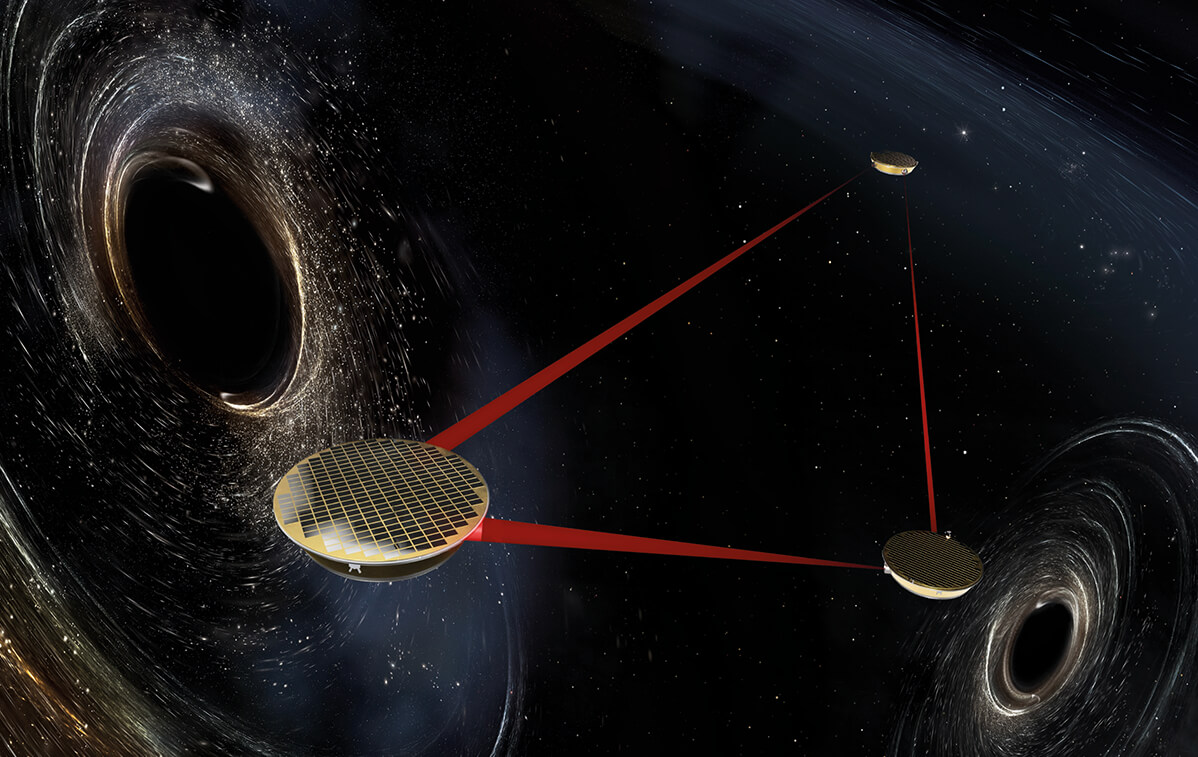
Following on the success of ground-based detectors, the Laser Interferometer Space Antenna (LISA) will take gravitational wave astronomy into space. LISA is a $2 billion European Space Agency led mission expected to launch into space in 2035. Three spacecrafts will be connected by laser beams to work together measuring very low frequency gravitational waves from deep space.
Researchers aim to probe supermassive black holes and detect extreme events deeper in space than ever before.
“Because the detectors will be in space and sensitive to low frequency gravitational waves, we be able to advance new research in extreme astrophysics,” says Safi-Harb.
“For UM researchers to be playing such an important part in this international project speaks to our strengths as cutting-edge thinkers with infinite curiosity about the universe,” says Dr. Mario Pinto, Vice-President Research and International. “This new CFI funding helps place Manitoba at the centre, delivering state-of-the-art software to propel this exciting area of astrophysics forward.”
Boilerplate: Research
For nearly 150 years, UM has transformed lives through groundbreaking research and homegrown innovation. We push the boundaries of knowledge and do the hard work here in Manitoba to move our community and the world forward. With a spirit of determination and discovery, we are shaping a better future for our province and beyond.
Research at the University of Manitoba is partially supported by funding from the Government of Canada Research Support Fund.