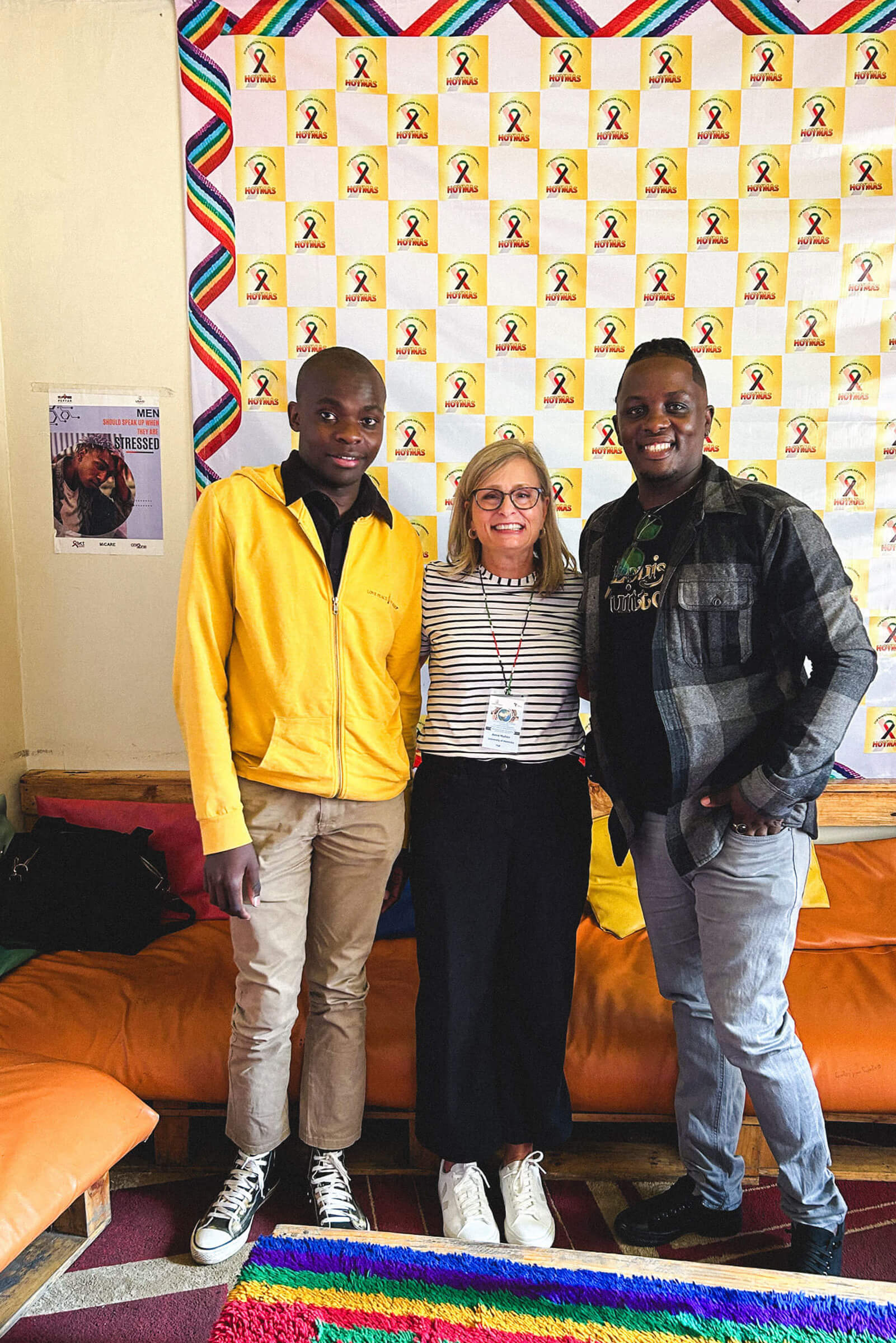
Listening to each other’s stories is therapy. This comes from Daniel, a client at HOYMAS (Health Options for Young Men on HIV/AIDS and STIs). HOYMAS, like it’s mother clinic SWOP, utilizes peer educators and offers all services under one roof, seeing 6,000 male sex workers each year. Walls in these small, humble offices are painted the colours of the rainbow—cheerful and inviting. Our group crowds into a brightly lit room with couches. On one wall is a huge white banner called “a talking wall,” covered with messages of encouragement from clinic clients and visitors.
Levi, a peer educator, shares what this room has meant to him. It was a safe space to sleep during the day after working all night, when he was living on the streets, rejected by his family. Those words on the wall served as messages to continue on and focus on the good in life.
Piles of packed binders spill over the small coffee table in the SWOP Ambassadors offices, where sex workers advocate for their community. These binders are filled with data documenting the assaults and often gruesome murders of sex workers. The four women we meet are a special group. Compassionate enough to face this work, and angry enough to have the strength to do it. Over and over again. Their work focuses on safety strategies, police sensitization and accountability, and mental health supports in a city where they say violence against women has been normalized.
Rosemary is a strong woman! She is the leader and the voice of this group. They have 12 paralegals who volunteer, meeting their peers in the police station, helping to navigate the discriminatory legal system. The ambassadors are planning an End Femicide Campaign focusing on the female violence and murders. Their work is hauntingly similar to Indigenous women in Canada raising their voices for the MMIWG2S. Later that night, I lie awake thinking about their unwavering commitment, despite feeling unseen by society.