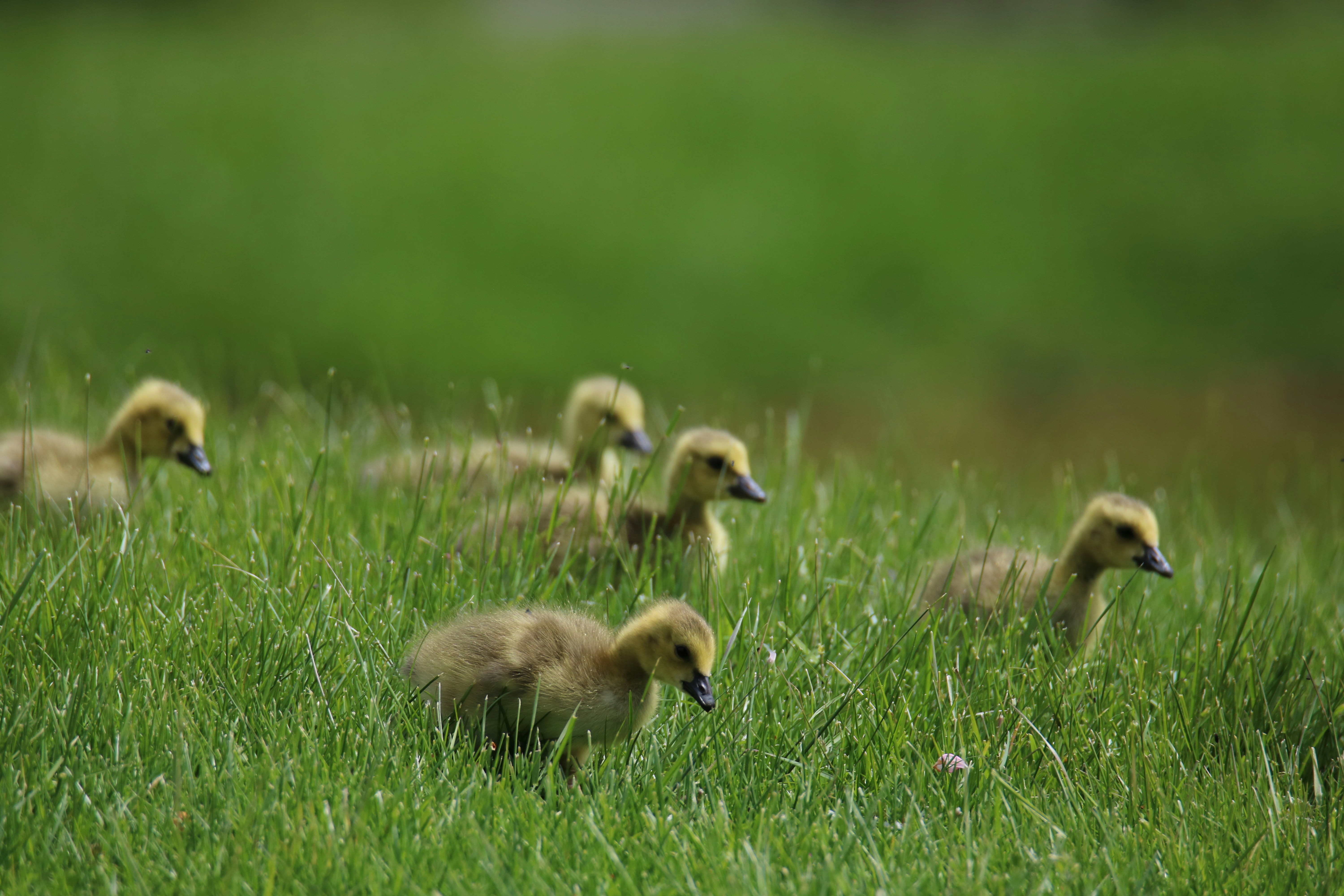
Goslings arrive on campus
The families of geese are changing at the Fort Garry campus, here is what to look for now.
It is now the part of the spring when goose eggs start to hatch, and you may start to notice goslings making their appearance around campus. The addition of goslings changes the geese's movement on campus. You may not see geese couples every day in the same place anymore because they are moving about doing goose family activities.
Family groups or families consist of the adult pair and two to twelve goslings, with an average of five, and will be constantly moving around campus for water, food and other family activities. Expect to see this for the next few months.
Watch out for goose families crossing roads and paths; drive slowly. The goose families stay together, and since not all family members can fly, expect them to walk at a goose pace across the road or pathways to the water or a snack. Allow extra time for travelling around campus to allow for goose crossings.
Goslings are undeniably cute, covered in fluffy yellow and grey down feathers and with oversized webbed feet; they wobble and flap behind their parents. This might make you want to touch them or take photos. But as a reminder, keep at least one car-length away at all times. Both the goose and the gander are attentive parents and jointly care for their young. They are protective; you may hear a warning-hiss if you get too close.
If you want a picture, use a long lens on your camera. Getting too close to the birds can cause them unnecessary stress and they could hiss or charge at you in self-defence.
Because geese are protected under the Migratory Birds Act, we do not, intentionally or unintentionally, disturb their nesting sites or move or destroy nests. Occasionally, you will see broken eggs around campus nests due to raccoons and predatory bird species. That is part of the cycle of life.
Operation and maintenance staff, who set up the barriers covering planters and high-traffic areas earlier in the spring, may now need to help the geese by installing ramps for goslings on rooftop locations. These actions are part of helping staff and faculty live safely together with the geese on campus.
More tips on living with the Fort Garry campus geese read: Achieving peace with geese without the honk and hiss
Need help or have a concern?
By staying informed, respecting wildlife, and following campus guidance, staff and faculty can help keep our campus safe and welcoming throughout the spring season.
A message from: Environmental Health and Safety Office (EHSO) Operations and Maintenance (O&M)
Creating space for everyone to thrive is more than a goal—it’s who we are. Fostering a vibrant community is among the commitments you’ll find in MomentUM: Leading change together(external link), the University of Manitoba’s 2024–2029 strategic plan.
Acclaimed production designer and alum Mary Kerr tells us how UM shaped her artistry and why she thinks contemporary theatre has lost its essential...
Dr. Mandi Baker's new book, Inclusion and Equity in Outdoor Leisure: Whose Body Belongs, looks at how some people feel they do not belong outdoors.