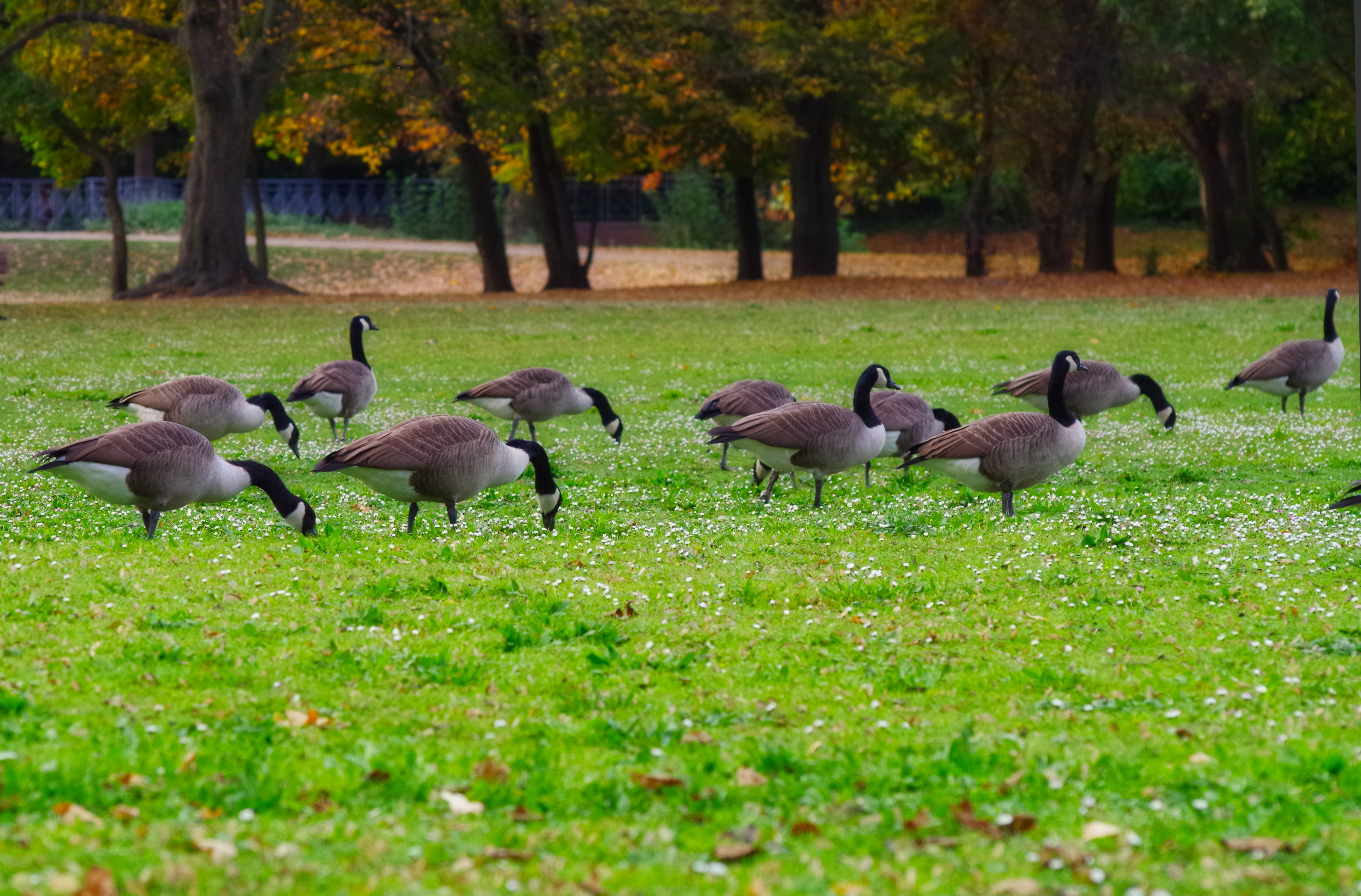
A gaggle of Canadian geese in a field on campus
A gaggle of geese making campus their home for the season

Achieving peace with geese without the honk and hiss

Tips on managing goose season on campus

As spring arrives in Manitoba, geese return to campus—and chances are, you’ve already seen them on your way to class. Over the next few weeks, more geese will settle around campus as nesting season begins. While they’re a familiar part of campus life, geese can be more protective at this time of year, especially when nests and goslings are nearby.

To help keep everyone safe, Operations and Maintenance (O&M) puts measures in place each spring at the Fort Garry campus. These include covering planters in high-traffic areas to discourage nesting and installing ramps to help goslings safely reach the ground when geese nest on rooftops. You may also notice temporary signs and barriers near nesting areas—these are there to help students avoid close encounters and prevent conflicts.

You can learn more about campus wildlife management through the University of Manitoba Wildlife Management Plan.

Sharing campus spaces with geese

Geese do well in urban spaces like campuses because they have access to water, food, and nesting spots. They’re used to people, bikes, cars, and busy walkways—but during nesting season, they can become territorial.

Geese are part of daily campus life, just like lecture halls and green spaces. Respecting their space helps keep both students and wildlife safe.

How to stay safe around geese:

  • Do not touch or handle geese, goslings, or nests—ever.
  • Keep your distance, especially from nests and posted nesting areas.
  • Back away slowly if a goose hisses, flaps its wings, or moves toward you.
  • Do not feed geese or throw objects at them. Avoid provoking interactions, including taking close-up photos or “selfies.”
  • Watch where you’re walking or biking and be prepared for geese to cross pathways and roads.

Giving geese space, especially when goslings are present, is the best way to avoid aggressive behaviour.
 

Two geese hissing at each other
Geese can be aggressive during their nesting season

Avian flu: what students should know

As geese return each spring, it’s also important to be aware of avian influenza (avian flu). This virus mainly affects birds such as geese and ducks. The risk to students is low, but infection can occur through close contact with infected birds or contaminated areas.

Wild birds can spread the virus through droppings, feathers, and secretions. Avoid contact with areas heavily soiled by bird droppings, and stay away from sick or dead birds.

Tips to reduce risk:

  • Avoid stepping in or touching bird droppings. If droppings get on your shoes, clean them when safe to do so and wash your hands.
  • Do not handle sick, injured, or dead birds.
  • If you have pets, keep them leashed and away from birds and droppings.

In rare cases, avian flu symptoms in humans can resemble seasonal flu, including fever, cough, sore throat, muscle aches, or eye irritation. Practicing good hygiene and avoiding contact with birds are the most effective ways to stay healthy.

Moving around campus safely

During spring, goose nests may appear near building entrances, sidewalks, residence areas, rooftops, and green spaces. If an area is marked with signs or barriers, follow posted directions and use alternate routes when possible.

These precautions help prevent situations where geese feel threatened and protect students, staff, and wildlife alike.

Need help or have a concern?

  •  Report harmful behaviour toward geese: Security Services — 204-474-9312
  • Dead geese or wildlife removal: Facilities Customer Service Desk — ppwod@umanitoba.ca
  • Wildlife safety concerns or questions: Environmental Health and Safety Office (EHSO) — EHSO@umanitoba.ca or 204-474-6633

By staying informed, respecting wildlife, and following campus guidance, students can help keep our campus safe and welcoming throughout the spring season.

A message from: Environmental Health and Safety Office (EHSO) Operations and Maintenance (O&M)
Boilerplate: Community

Creating space for everyone to thrive is more than a goal—it’s who we are. Fostering a vibrant community is among the commitments you’ll find in MomentUM: Leading change together, the University of Manitoba’s 2024–2029 strategic plan.