Potential new MS treatment may restore brain function
A UM research team led by Dr. Soheila Karimi has found that the protein neuregulin-1 can halt multiple sclerosis in mice.
Estimated Read Time:
3 minutes
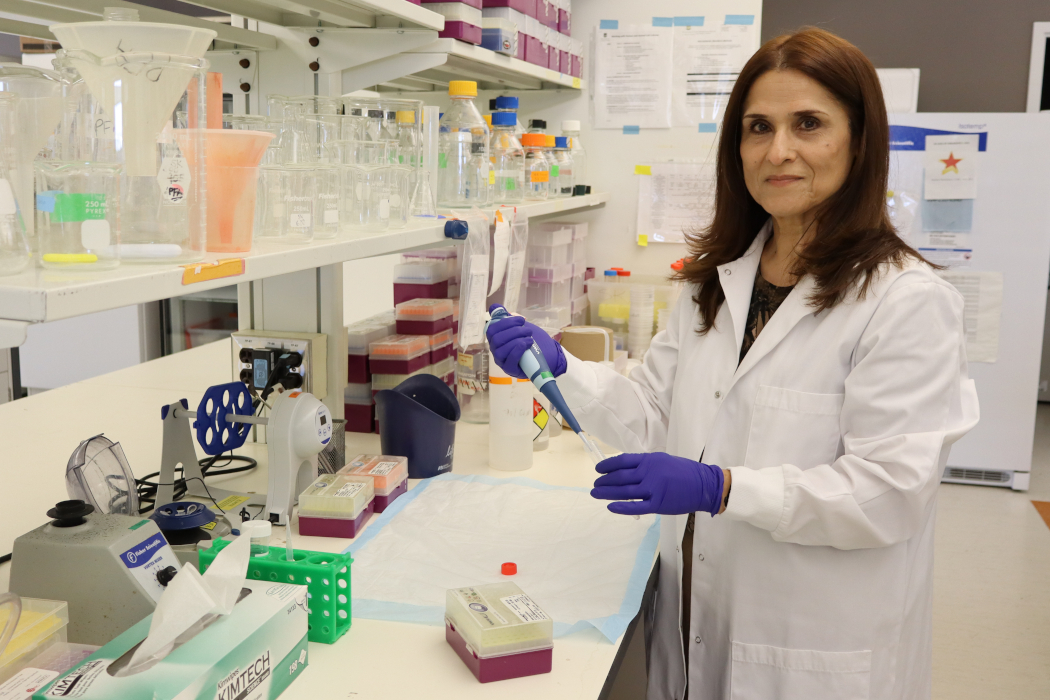
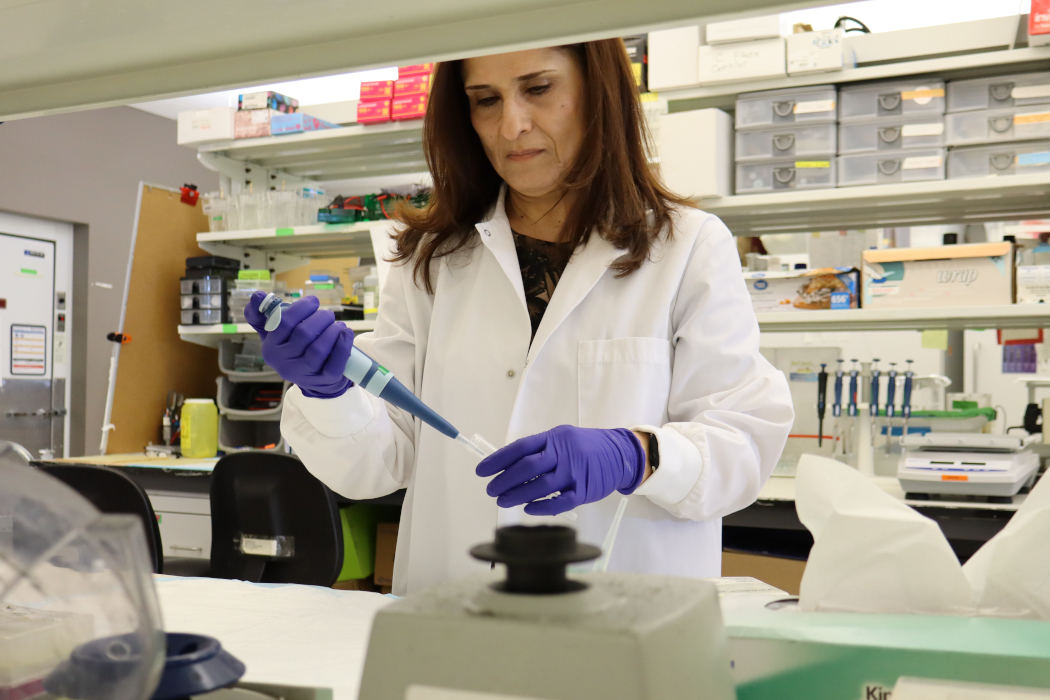
Dr. Soheila Karimi, a professor of physiology and pathophysiology at the Max Rady College of Medicine, and her team are studying potential treatments for chronic multiple sclerosis.
Dr. Soheila Karimi, a professor of physiology and pathophysiology at the Max Rady College of Medicine, and her team are studying potential treatments for chronic multiple sclerosis.
Estimated Read Time:
3 minutes
By
Matthew Kruchak
Dr. Soheila Karimi and her team have discovered a potential new treatment for people living with chronic multiple sclerosis (MS), a stage of the disease when the brain’s natural ability to repair itself begins to fail, leading to lasting and often worsening disabilities.
This treatment aims to restore the brain’s capacity for repair, offering new hope for slowing and reversing disability.
“This is a major breakthrough,” said Karimi, a professor of physiology and pathophysiology at the Max Rady College of Medicine.
“There is currently no viable therapy for the progressive stage of MS. We believe our findings will pave the way for a new treatment that can enhance the quality of life for people living with MS”
Dr. Soheila Karimi
MS is a chronic neurological disease of the central nervous system, which affects the brain, optic nerves and spinal cord. Karimi said that Canada has one of the highest rates of MS in the world – with about 90,000 people living with the disease and 12 new cases each day. And Manitoba has one of the highest rates in the country.
Myelin is key
In MS, Karimi said that the body’s immune system attacks and destroys myelin, a protective covering around nerve fibers.
“Myelin is essential to effectively relay messages through the brain and spinal cord to the body and vice versa,” said Karimi, founding director of the Manitoba Multiple Sclerosis Research Center, vice-dean of graduate and postdoctoral studies at Rady Faculty of Health Sciences, and a scientist with the Children’s Research Institute of Manitoba.
When myelin is damaged, Karimi said it can cause many symptoms, including loss of mobility, vision impairment, fatigue, anxiety and cognition decline.
“In MS, damage to the myelin can subsequently result in damage to nerve fibres, and over time, these changes contribute to permanent brain degeneration and disease worsening,” she said.
Karimi’s research focuses on a protein called neuregulin-1 (Nrg-1), which she said is important for brain function and integrity of myelin and nerve fibers. In human MS samples and in animal models of MS, Karimi’s team discovered that Nrg-1 is significantly depleted from the brain. When Nrg-1 was restored in mouse models with chronic MS, it could reduce the damage to the brain and spinal cord. It also reversed mobility and cognition issues in the mice.
Dr. Soheila Karimi
The research team also compared Nrg-1 treatment with an approved leading treatment given to patients with secondary progressive MS and observed that their treatment worked better in reversing brain damages and promoting brain function at a much lower dose in mice.
“Nrg-1 treatment was able to repair the myelin damage that happened to the brain as a result of the disease and improved cognition,” Karimi said.
“Overall, we have demonstrated the promise of Nrg-1 as a candidate treatment for slowing MS progression, promoting myelin repair, and restoring cognition and mobility of animals with progressive MS.”
Karimi, said they’ve conducted previous research that showed the same positive results of Nrg-1 treatment in mouse with early-stage MS that model relapsing-remitting MS with active inflammation, suggesting that Nrg-1 treatment can potentially serve as an immune-modulatory and regenerative therapy for both early and chronic MS.
The research is jointly funded by the Canadian Institutes of Health Research and MS Canada.
Clinical trials to come
The next step for Karimi and her team is to develop a clinical-grade peptide, a small molecule that would be injected into the body of people with MS as the treatment. Then her Nrg-1 treatment would be ready to be tested in a clinical trial.
But Karimi still has several questions to answer, including what is the latest time the treatment could be given to people with progressive MS and be still effective? How do you identify patients who would benefit from Nrg-1 treatment? And what is the frequency of treatment?
“These are the areas that we would like to continue researching,” Karimi said. “While our findings are very promising, there is still more work ahead of us.”
For nearly 150 years, UM has transformed lives through groundbreaking research and homegrown innovation. We push the boundaries of knowledge and do the hard work here in Manitoba to move our community and the world forward. With a spirit of determination and discovery, we are shaping a better future for our province and beyond.