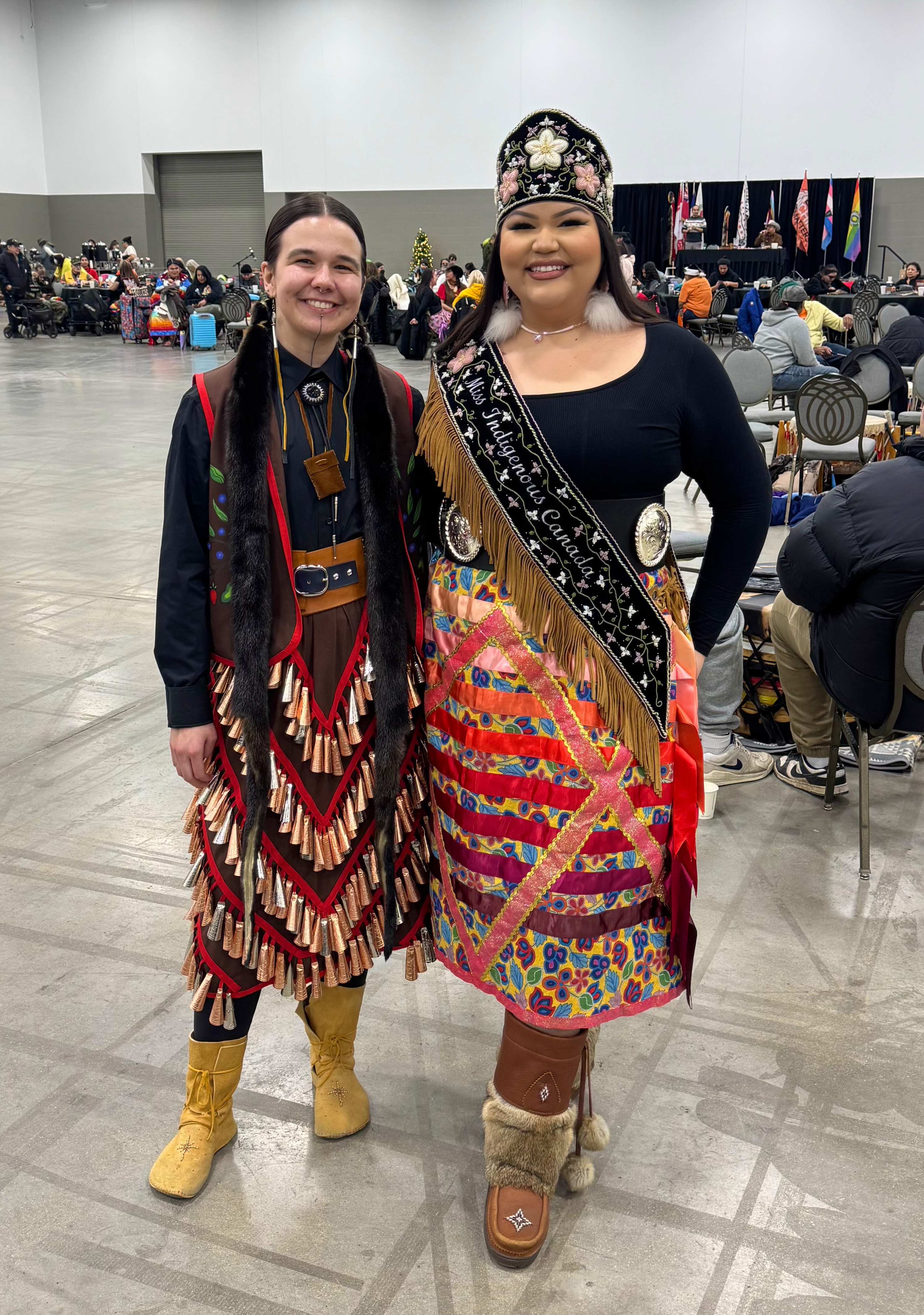
Queskekapow reflects on the Future 40 award, their journey, hopes for the future and advice for other youth and students.
How does it feel to be recognized as a CBC Manitoba Future 40 winner?
I’m still processing it, honestly! I’ve been so busy with school and work that I haven’t had much time to think about it. What I hope the most for this recognition is that it brings more attention to issues faced by our communities.
I wouldn't have gotten this recognition without the communities I belong to, so to me, this is more about them than myself.
Are there any experiences that have shaped you?
One of the most impactful experiences that has shaped my way of being is my lived experience. As a Two-Spirit, neurodiverse, First Nations person from northern Manitoba, I have experienced hardship in many forms. Still, I am grateful to have learned so much from what I have experienced, because it has given me knowledge that one can’t learn in their career or academia; I now use this knowledge to support our communities in an effort to lessen harmful experiences and uplift healing and community wellbeing.
I was told by a mentor of mine, “The best social workers are those with lived experience,” and I wholeheartedly believe that.
What drives you to do the work you do?
My community! I would not be here if it were not for the ones who came before me, the ones I walk beside, and those in the future. I used to feel a lot of pain and resentment toward parts of my identity due to various barriers, but over the years, I've continued to be educated, supported, and embraced by our communities, and I’ll be forever grateful to be part of them.
Have there been any barriers you have had to face?
I’ve faced a plethora of barriers as a Two-Spirit neurodiverse First Nations person, such as precarious housing as a youth, lack of accessible and equitable health care and education, racism, homophobia, and transphobia. While no one should have to go through this, and by no means do I want to romanticize how hard it is to live in this colonial Eurocentric society as a minority, by saying it empowered me because it didn’t. These barriers and experiences didn't empower me or make me more resilient; it was the community around me and the blood memory of my ancestry that got me through this and continues to empower me in efforts to help our communities not have to be constantly resilient out of necessity.
What drew you to pursue a social work degree at the UM?
My lived experience! I knew I wanted to be in a helping profession and gain skills to go back to the north to help our communities. Still, I wasn’t sure what degree to get into until I got further into community activism and met a lot of social workers who had the same values I did and skills I wanted to refine and learn. That's when I realized the professional values and ethics aligned with my own.
I’m so grateful for all the social workers who opened my eyes to how meaningful this profession could be and how much it'll teach you to serve the community.
Do you have any advice for youth and students who want to get involved in community?
Get out there! Put in the work! Be an active community member! Listen and learn from the community! Many folks in the program don’t have community work experience but want to get involved. Start by volunteering, attending protests, listening to community members, applying to councils and advisory groups, and putting in the work.
Getting involved in advocacy takes a lot of work. Still, it is some of the most important work potential social workers can do, and it will provide experiences that will make you not only a better social worker but also a better community member. I know school is a lot, and if someone doesn't have the capacity to do this type of work, that's very understandable. Capacity should be honoured, but I also find it important to distinguish between capacity and privilege.
It is a privilege to be able to turn a blind eye to injustice and not be an advocate, but it also doesn’t erase capacity; it's all about balance.
What is next for you, and what is your vision for the future?
I need to get through this degree! It is both a privilege and a challenge to be in post-secondary education. While it is a challenge, I hope to make the most of my studies, be involved in classes, and get to know my classmates further!
I’m someone who not only focuses on school but is also grateful to be continuously supported and to learn from my communities in various roles and spaces.
I hope to graduate in the spring of 2027 and move back north to support our communities further. I hope to see more classmates involved in the community and to be part of the change we are all working towards.