Annual forum focused on importance of community engagement and experiential learning
Estimated Read Time:
3 minutes
The Faculty of Law's Director of Access to Justice and Community Engagement and the Manitoba Law Foundation co-hosted the third annual Access to Justice Forum at Robson Hall in May.
The Faculty of Law's Director of Access to Justice and Community Engagement and the Manitoba Law Foundation co-hosted the third annual Access to Justice Forum at Robson Hall in May.
Estimated Read Time:
3 minutes
By
Beatriz Divina, 2L
For the third consecutive year, the University of Manitoba and the Manitoba Law Foundation co-hosted Manitoba’s Annual Access to Justice (A2J) Forum, held from May 21st to May 22nd, 2026. This year’s theme, Learning by Serving, centred on the importance of community engagement and experiential learning, and their broader impacts on access to justice in Manitoba communities.
The Forum featured presentations from Robert Hotomani (Knowledge Holder, Sagkeeng First Nation); Sarah Buhler (University of Saskatchewan, Faculty of Law) and Gemma Smyth (University of Windsor, Faculty of Law); Marc Kruse (Director of Indigenous Legal Learning and Services); Laurelle Harris, K.C. (Director of ITL, Equity, and Transformation); Elizabeth McCandless (Executive Director of Clinics); Mary Shariff (Associate Dean of Graduate Studies; Director, Master of Human Rights Program); Allison Fenske (Clinical Counsel); Nick Slonosky (Supervising Lawyer, L. Kerry Vickar Business Law Clinic); Tarik Daoudi (L'Association des juristes d'expression française du Manitoba (AJEFM/Infojustice); Kirsten Wurmann (Manitoba Law Library); Janine Bramadat (End Homelessness); and Dallas Gillingham (3L, Coordinator for Pro Bono Students Canada).
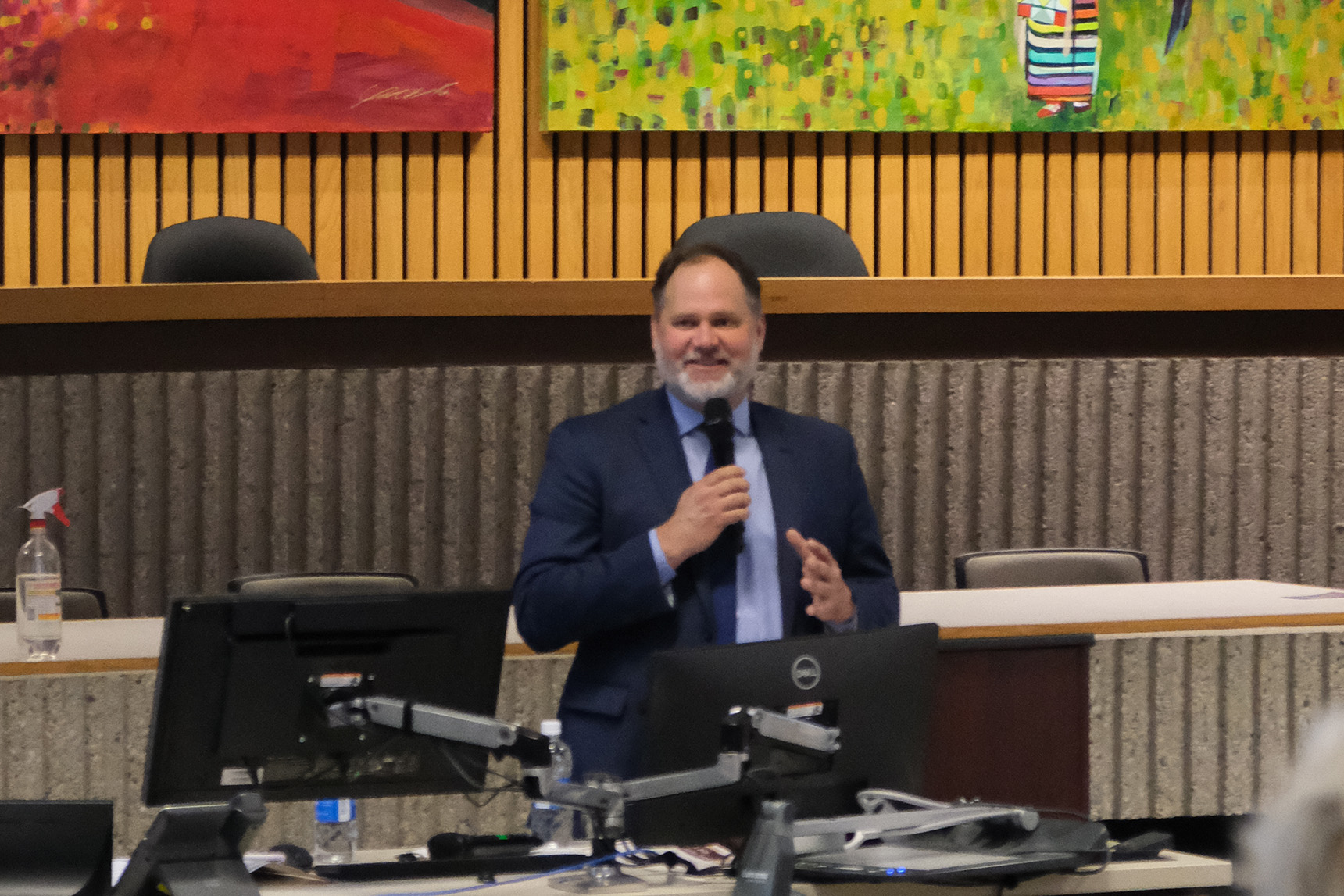
Manitoba’s Minister of Justice and Attorney General, Matt Wiebe, delivered remarks and joined participants as a special guest.
The Forum was also honoured to welcome Manitoba’s Minister of Justice and Attorney General, Matt Wiebe, who delivered remarks and joined participants as a special guest. In addition, representatives from all three levels of Court provided updates on behalf of their respective courts.
Focus on Experiential Learning
Hotomani spoke about the importance of spirituality and culture, as well as the lasting impacts of colonization that continue to create barriers to self-discovery and reconnection. Building on these themes, Kruse highlighted two Faculty of Law initiatives—the wills and estates clinic and the newly established report-writing clinic—which draw on Indigenous legal approaches to support and strengthen First Nations communities and in which law students gain practical experience.
Buhler and Smyth presented on clinical legal education, highlighting its value not only as a means of developing practical legal skills, but also as a powerful tool to advance access to justice. Harris, K.C., reflected on the successes and impacts of the University of Manitoba Faculty of Law’s first ITL cohort. McCandless discussed the various experiential learning programs offered at Robson Hall, while Shariff spoke about the graduate programs offered. Fenske spoke about student-led case management and gap-filling initiatives. Slonosky discussed the Business Law and Arts clinics, as well as the opportunity for students to gain experience with AI-powered client management systems. Gillingham concluded by highlighting the meaningful learning opportunities that Pro-Bono Students Canada provides while helping to address community needs.
During panel discussions, Dauodi, Wurmann, and Bramadat reflected on the valuable contributions students have made to their respective organizations. The panel discussions also featured student testimonials from Ashley Allen (AJEFM/Infojustice) and Ege Kaymaz (Manitoba Law Library), who shared key takeaways and perspectives on their placements.
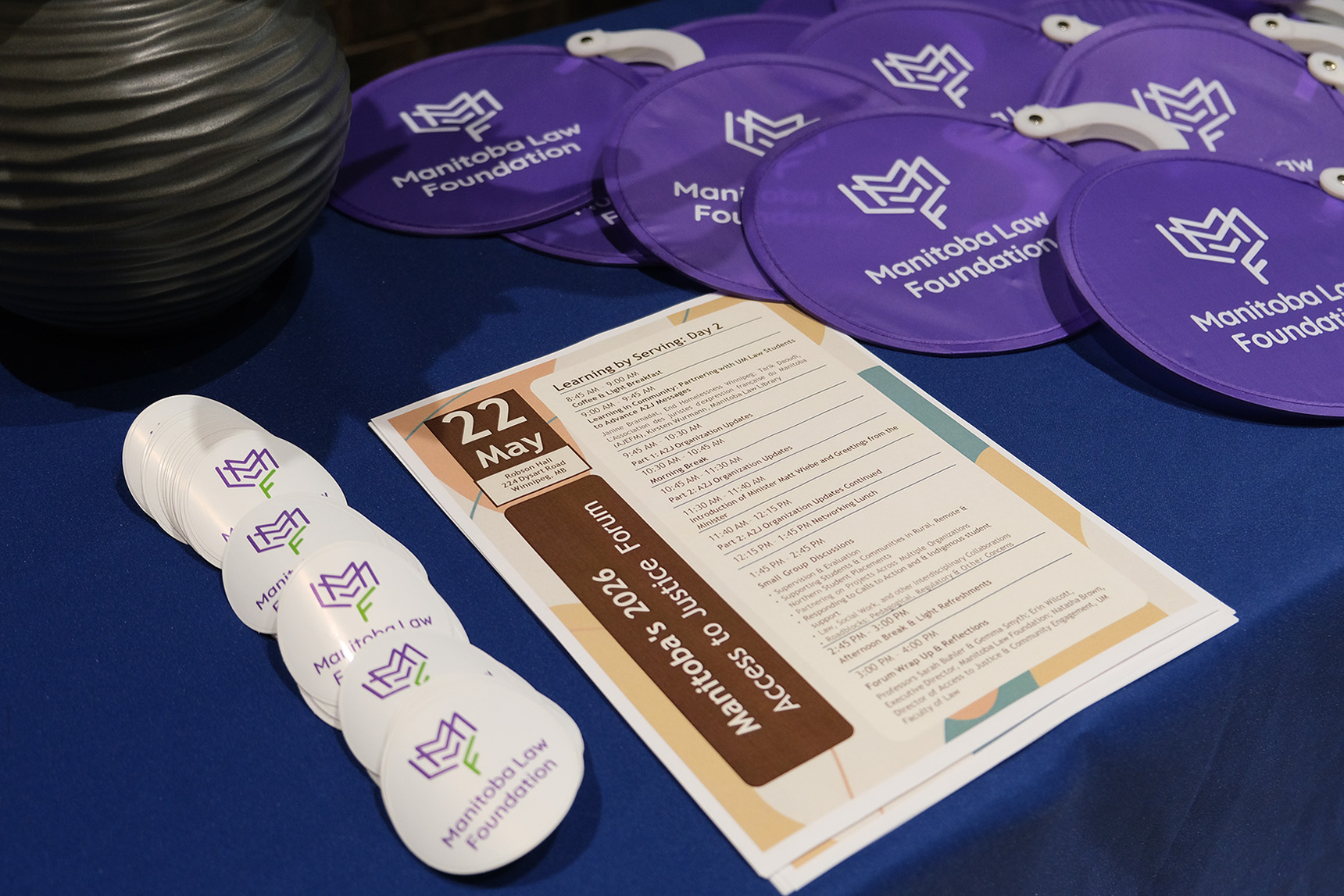
The forum's jam-packed schedule filled two full days.
Growing Access to Justice services
Natasha Brown, Director of Access to Justice and Community Engagement at the University of Manitoba’s Faculty of Law, provided updates regarding the new Manitoba Access to Justice website. Set to launch soon, the website will serve as a hub for collaboration among A2J partners and organizations. Brown also announced the new Manitoba Access to Justice LinkedIn page, which will support and complement the website’s initiatives.
Following the organizational updates presented by A2J stakeholders, which will be included in an upcoming A2J newsletter, attendees participated in small group discussions on a range of topics exploring how clinics and community-based learning can respond to unmet legal needs while supporting meaningful student learning.
Forum participants
Representatives from the following A2J organizations attended the 2026 Forum:
Manitoba Court of Appeal
Manitoba Court of King’s Bench
Manitoba Provincial Court
Law Society of Manitoba
Manitoba Law Foundation
Manitoba Government - Department of Justice
Manitoba Law Library
Manitoba Bar Association
University of Manitoba, Faculty of Law
University of Saskatchewan, Faculty of Law
University of Windsor, Faculty of Law
Manitoba Law Reform Commission
Manitoba Justice - Prosecution Services
Manitoba Justice - Legal Services
Manitoba Justice - Family Resolution Services
Robson Hall Rights Clinic
Manitoba Eco-Network
Nii Gaanii Asin @ At the Root Consulting
Community Unemployed Help Centre
Ochekwiwanasowewin Restorative Justice
Manitoba Bar Association
Legal Help Centre
Healthy Muslim Families
Onashowewin Justice Circle
Manitoba Council of Administrative Tribunals
Community Legal Education Association
End Homelessness Winnipeg
Legal Aid Manitoba
Legal Information for Incarcerated Manitobans (LIIM) and Prison Libraries Committee (PLC)
L’Association des juristes d’expression française du Manitoba (AJEFM/Infojustice)
Manitoba Law Library
Mediation Services
First Nations Family Advocate Office
Marrow Law/Kiwetinohk Consulting
Manitoba Métis Federation
Bilal Community and Family Centre Inc
MIIC - A Welcome Place
Public Interest Law Centre (PILC)
Pro Bono Students Canada - University of Manitoba Chapter